⭐⭐⭐⭐⭐ Reviewed by Demetria Head for Reader Views
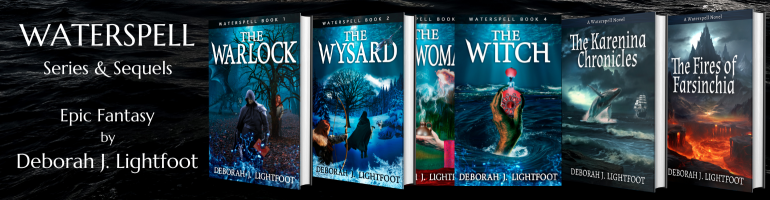
The Karenina Chronicles is book five in the Waterspell series but can easily be read as a standalone tale. This is a fantasy adventure that covers not just expansive worldbuilding, but also personal losses and healing. The story takes place in the Waterspell universe. Readers get to follow Lady Karenina of Ruain. After her husband passes, she takes a journey to an unfamiliar place. It starts as just an attempt to outrun grief, but it becomes her way to find her identity and purpose.

As the story begins, Nina has spent a great deal of her life wielding immense power, but now she questions everything. She teases her younger brother Dalton while they are aboard a ship on the waters of Ladrehdin. She is a seasoned water mage and a widow. But she is also a mother and a traveler. When she leaves her home, where it is safe, she ends up in the South Country and finds herself faced with things way more unsettling than any enemy.
Lightfoot’s novel stands out for a number of reasons. There is a perfect contrast between Nina’s strengths and her vulnerability. Early on in the story, she shows her skill and confidence by dispatching a would-be attacker with her sling. But later, we see her full of doubt about her future, her purpose, and her magical abilities. It makes her relatable on a human level to readers. One moment in particular that was memorable was when she attempted to summon water, but her power did not respond. This is something she has done many times before. So, this scene actually marks a turning point for her as a woman trying to get through life after loss. I also appreciated the fact that Nina was not at all painted as this perfect heroine. She had compassion and wisdom, but she also had her occasional flaws.
A water mage who can summon floods, suddenly unable to call a single drop. What happens next?
Reader Views
When the power you built your life around stops answering, who are you? Lady Karenina leaves home and hearth to outrun her grief, and finds something harder than any enemy waiting in the South Country: herself. This is a fantasy about loss, healing, and the quiet courage it takes to rebuild.
I love how the author reveals character through some very meaningful encounters. It did not matter if Nina was helping a desperate mother in poverty, sharing a story around a campfire, or reflecting on family memories. Each of her interactions deepens the world Lightfoot has created. While the action scenes were impactful, these softer moments were equally impactful, if not more. I appreciated the worldbuilding as well. It was immersive, but it never overwhelmed the story. For example, the South Country’s scrublands, the coastal ports, and the isolated settlements made me feel like I lived there. Throw in the characters with struggles and aspirations, and it adds the perfect texture to the whole narrative.
There were quite a few interesting characters besides Nina. Dalton, her brother, played an important role in moving the story along. He also has a role as a responsible steward and weather mage. This contrasts well with Nina’s wanderlust and impulsiveness. It’s through Dalton that readers learn so much about Nina’s family history as well as the Ruain culture. Then there is Tilda in Easthaven and Dalton’s romantic interest. She adds humor and warmth to the story. Her role is brief, but she helps connect the important threads of the story. Isobel is the struggling mom who suffers through poverty. She is devoted to her children, and her part of the story just makes it emotionally powerful. Other characters I found rather interesting included Willow, who is the wife of Legary. She is the town’s wisewoman, also. She bonds with Nina and serves as a friend and confidante. Legary is in Granger, and readers will soon find out who he is and why Nina traveled there to see him. He is a talented stonemason and adds humor to the story. Corlis is mysterious and not fully understood. Legary has his concerns about leaving Nina in his care. His character creates a mystery and adds anticipation to the narrative. I loved the wolf that becomes more than just an animal companion. Nina’s relationship with this creature actually creates some of the most atmospheric scenes in the book.
Some of my favorite scenes that stood out for me were seeing Nina and Willow work as healers. Nina accompanies Willow on her healing visits, and this adds another layer of richness to the worldbuilding. But this scene is not just about magic and healing. It also showcases community, caregiving, and the quieter ways that people help each other. Another scene that stood out was surrounding Corlis. When he is introduced, it creates the novel’s strongest suspenseful threads. I was just as uncertain and suspicious of Corlis as Legary was. The journey into the wilderness was another standout moment for me. This combined physical danger and emotional reflection. This journey also seems to test Nina’s resilience and forces her to think about who she is becoming.
Overall, The Karenina Chronicles is thoughtful, emotional, and goes beyond being just a fantasy. Lightfoot explored grief, rediscovery, family, community, and resilience. The worlds were carefully tended to and felt real. The array of characters was all relatable. The adventures, the magic, and the very human moments were addictive and kept me invested. Readers who enjoyed Robin Hobb’s The Liveship Traders or Juliet Marillier’s Blackthorn & Grim novels will most appreciate what Lightfoot did with The Karenina Chronicles.
At a Glance: A character-driven fantasy adventure about a widowed water mage whose journey through unfamiliar lands becomes a path toward renewal. The story blends magic, grief, healing, family ties, and atmospheric wilderness travel.
Best for Readers Who Enjoy: fantasy adventure, mature heroines, books about grief and healing, water magic, character-driven fantasy, found purpose, immersive worldbuilding, emotional journeys, magical caregiving
— Demetria Head, Reader Views
5-Star Review





 “Immediately immersive”