A novel of torture, revenge, and redemption through the lens of people with special psychic abilities.
Books about folks with extra-special psychic abilities and the suffering their powers bring aren’t anything new. You have books such as Carrie, Firestarter, and The Institute by Stephen King plus many more from various authors across various genres. So finding something new, fresh, and unique in this genre is fantastic. And that’s what we have here.
Set in a world you might consider dystopian, but reads like a western, Devin is a young lady who has no control over her powers. There are others, who are called “sykes,” and the town of Purity persecutes them. Sometimes they are killed outright and sometimes they are sent to a “facility” which is nothing more than a torture chamber of horrors. This is the fate of Devin. There, she is tortured until her mind almost breaks and her abilities are numbed.
Not caring if she lives or dies, she is rescued, or kidnapped, by a trio of men from a train heading home. Mike Sutter is the leader and it appears, at first, that he’s her rescuer and savior perhaps. But we’ll find out that he’s one of the most powerful sykes around and he lives for bloodthirsty revenge against the town of Purity for what he’d been put through. He has a ranch far away from prying eyes and a whole crew full of other sykes who have been rescued and found a safe space there.
But is he as friendly as he first seems? And can Devin reclaim her powers to help him? Does she even want to? Those are questions this book will answer, and the terrible truths about hating people for who they are and the seeds of destruction this abuse plants in their minds are at the forefront. Devin will have allies. A romantic arc with a rancher named Jack, a bruja who has her own form of magic, and another hard-nosed woman will help along the way.
Devin is a sympathetic character. She’s tough and holds her own but there’s a tenderness there as well. Mike is a character who could fall under the protagonist/antagonist category. He’s not necessarily a bad guy but his quest for revenge blinds his moral compass at times.
Filled with an incredibly heartfelt narrative, moments of destruction and bloodshed, and a romantic angle which actually means something to the story, I highly recommend this novel. Five stars.
The Karenina Chronicles is book five in the Waterspell series but can easily be read as a standalone tale. This is a fantasy adventure that covers not just expansive worldbuilding, but also personal losses and healing. The story takes place in the Waterspell universe. Readers get to follow Lady Karenina of Ruain. After her husband passes, she takes a journey to an unfamiliar place. It starts as just an attempt to outrun grief, but it becomes her way to find her identity and purpose.
As the story begins, Nina has spent a great deal of her life wielding immense power, but now she questions everything. She teases her younger brother Dalton while they are aboard a ship on the waters of Ladrehdin. She is a seasoned water mage and a widow. But she is also a mother and a traveler. When she leaves her home, where it is safe, she ends up in the South Country and finds herself faced with things way more unsettling than any enemy.
Lightfoot’s novel stands out for a number of reasons. There is a perfect contrast between Nina’s strengths and her vulnerability. Early on in the story, she shows her skill and confidence by dispatching a would-be attacker with her sling. But later, we see her full of doubt about her future, her purpose, and her magical abilities. It makes her relatable on a human level to readers. One moment in particular that was memorable was when she attempted to summon water, but her power did not respond. This is something she has done many times before. So, this scene actually marks a turning point for her as a woman trying to get through life after loss. I also appreciated the fact that Nina was not at all painted as this perfect heroine. She had compassion and wisdom, but she also had her occasional flaws.
A water mage who can summon floods, suddenly unable to call a single drop. What happens next?
When the power you built your life around stops answering, who are you? Lady Karenina leaves home and hearth to outrun her grief, and finds something harder than any enemy waiting in the South Country: herself. This is a fantasy about loss, healing, and the quiet courage it takes to rebuild.
Reader Views
I love how the author reveals character through some very meaningful encounters. It did not matter if Nina was helping a desperate mother in poverty, sharing a story around a campfire, or reflecting on family memories. Each of her interactions deepens the world Lightfoot has created. While the action scenes were impactful, these softer moments were equally impactful, if not more. I appreciated the worldbuilding as well. It was immersive, but it never overwhelmed the story. For example, the South Country’s scrublands, the coastal ports, and the isolated settlements made me feel like I lived there. Throw in the characters with struggles and aspirations, and it adds the perfect texture to the whole narrative.
There were quite a few interesting characters besides Nina. Dalton, her brother, played an important role in moving the story along. He also has a role as a responsible steward and weather mage. This contrasts well with Nina’s wanderlust and impulsiveness. It’s through Dalton that readers learn so much about Nina’s family history as well as the Ruain culture. Then there is Tilda in Easthaven and Dalton’s romantic interest. She adds humor and warmth to the story. Her role is brief, but she helps connect the important threads of the story. Isobel is the struggling mom who suffers through poverty. She is devoted to her children, and her part of the story just makes it emotionally powerful. Other characters I found rather interesting included Willow, who is the wife of Legary. She is the town’s wisewoman, also. She bonds with Nina and serves as a friend and confidante. Legary is in Granger, and readers will soon find out who he is and why Nina traveled there to see him. He is a talented stonemason and adds humor to the story. Corlis is mysterious and not fully understood. Legary has his concerns about leaving Nina in his care. His character creates a mystery and adds anticipation to the narrative. I loved the wolf that becomes more than just an animal companion. Nina’s relationship with this creature actually creates some of the most atmospheric scenes in the book.
Some of my favorite scenes that stood out for me were seeing Nina and Willow work as healers. Nina accompanies Willow on her healing visits, and this adds another layer of richness to the worldbuilding. But this scene is not just about magic and healing. It also showcases community, caregiving, and the quieter ways that people help each other. Another scene that stood out was surrounding Corlis. When he is introduced, it creates the novel’s strongest suspenseful threads. I was just as uncertain and suspicious of Corlis as Legary was. The journey into the wilderness was another standout moment for me. This combined physical danger and emotional reflection. This journey also seems to test Nina’s resilience and forces her to think about who she is becoming.
Overall, The Karenina Chronicles is thoughtful, emotional, and goes beyond being just a fantasy. Lightfoot explored grief, rediscovery, family, community, and resilience. The worlds were carefully tended to and felt real. The array of characters was all relatable. The adventures, the magic, and the very human moments were addictive and kept me invested. Readers who enjoyed Robin Hobb’s The Liveship Traders or Juliet Marillier’s Blackthorn & Grim novels will most appreciate what Lightfoot did with The Karenina Chronicles.
At a Glance: A character-driven fantasy adventure about a widowed water mage whose journey through unfamiliar lands becomes a path toward renewal. The story blends magic, grief, healing, family ties, and atmospheric wilderness travel.
Best for Readers Who Enjoy: fantasy adventure, mature heroines, books about grief and healing, water magic, character-driven fantasy, found purpose, immersive worldbuilding, emotional journeys, magical caregiving
Some stories explore extraordinary powers. Others explore the cost of being different. Adverse Reactions successfully does both, delivering a gripping blend of paranormal suspense, dystopian fiction, and Weird West atmosphere while placing its emotional weight squarely on resilience, identity, and justice. Drawing on a haunting premise, Deborah J. Lightfoot crafts a world where psychokinetic abilities are treated as a crime, and fear is weaponized into persecution.
At the heart of the novel is Devin Perridin, a protagonist whose greatest battle isn’t simply against those who hunt her—it is against the psychological scars left by institutional cruelty. After surviving the horrific “treatments” of the Peaceful Hills sanatorium, Devin’s journey becomes one of reclaiming not only her abilities but also her sense of self. Her transformation from broken survivor to determined force of resistance gives the novel its strong emotional foundation.
Lightfoot also excels at creating a distinctive setting. The prairie landscapes, hidden ranches, outlaw figures, and lingering traces of Old Magic create an atmosphere that feels equal parts Western, dystopian, and paranormal without allowing any single genre to dominate. The cinematic descriptions make many scenes easy to visualize, while the steady tension keeps the narrative engaging throughout.
Beyond the action, the novel raises meaningful questions about prejudice, conformity, and the dangers of allowing fear to justify oppression. Rather than becoming overly preachy, these themes emerge naturally through Devin’s experiences and the morally complex characters surrounding her. Supporting characters such as Jack and Angelina provide warmth and balance, while others challenge Devin’s beliefs about revenge and justice, adding depth to the story.
While some readers may find the opening chapters slower as the world and Devin’s trauma are established, the pacing gains considerable momentum once the central conflict unfolds. From there, the novel delivers suspense, emotional growth, and satisfying character development that reward patient readers.
Verdict: Adverse Reactions is an imaginative standalone novel that successfully combines paranormal abilities, dystopian oppression, and Western storytelling into a compelling tale of survival and redemption. Readers looking for character-driven speculative fiction with emotional depth, atmospheric world-building, and meaningful themes will find this an engaging and memorable read.
⭐⭐⭐⭐⭐
This editorial review reflects the independent professional opinion of The Lit Credence editorial team.
Note: Richard Russo wrote this Open Letter in December 2013. Everything he warned about, then, has come to pass. The writing life is endangered by the downward pressure of e-book pricing, by the ongoing erosion of copyright protection, by the scorched-earth capitalism of Google and Amazon, by those who believe art should be cheap or free, and by internet search engines that direct people to sites selling pirated books. Even the single glimmer of hope that Mr. Russo offered in 2013—that Apple, Google, Amazon, Netflix, et al., need writers to provide them with content—is no longer the case. Mega-corporations now use artificial intelligence to churn out “content” for free or cheap. Mr. Russo’s conclusion, however, remains as valid now as when he wrote this letter:
The imaginative lives of us all will be diminished if authorship becomes untenable as a profession.
From Richard Russo:
An Open Letter to My Fellow Authors
It’s all changing, right before our eyes. Not just publishing, but the writing life itself, our ability to make a living from authorship. Even in the best of times, which these are not, most writers have to supplement their writing incomes by teaching, or throwing up sheet-rock, or cage fighting. It wasn’t always so, but for the last two decades I’ve lived the life most writers dream of: I write novels and stories, as well as the occasional screenplay, and every now and then I hit the road for a week or two and give talks. In short, I’m one of the blessed, and not just in terms of my occupation. My health is good, my children grown, their educations paid for. I’m sixty-four, which sucks, but it also means that nothing that happens in publishing—for good or ill—is going to affect me nearly as much as it affects younger writers, especially those who haven’t made their names yet. Even if the e-price of my next novel is $1.99, I won’t have to go back to cage fighting.
Still, if it turns out that I’ve enjoyed the best the writing life has to offer, that those who follow, even the most brilliant, will have to settle for less, that won’t make me happy and I suspect it won’t cheer other writers who’ve been as fortunate as I. It’s these writers, in particular, that I’m addressing here. Not everyone believes, as I do, that the writing life is endangered by the downward pressure of e-book pricing, by the relentless, ongoing erosion of copyright protection, by the scorched-earth capitalism of companies like Google and Amazon, by spineless publishers who won’t stand up to them, by the “information wants to be free” crowd who believe that art should be cheap or free and treated as a commodity, by internet search engines who are all too happy to direct people to on-line sites that sell pirated (read “stolen”) books, and even by militant librarians who see no reason why they shouldn’t be able to “lend” our e-books without restriction. But those of us who are alarmed by these trends have a duty, I think, to defend and protect the writing life that’s been good to us, not just on behalf of younger writers who will not have our advantages if we don’t, but also on behalf of readers, whose imaginative lives will be diminished if authorship becomes untenable as a profession.
I know, I know. Some insist that there’s never been a better time to be an author. Self-publishing has democratized the process, they argue, and authors can now earn royalties of up to seventy percent, where once we had to settle for what traditional publishers told us was our share. Anecdotal evidence is marshaled in support of this view (statistical evidence to follow). Those of us who are alarmed, we’re told, are, well, alarmists. Time will tell who’s right, but surely it can’t be a good idea for writers to stand on the sidelines while our collective fate is decided by others. Especially when we consider who those others are. Entities like Google and Apple and Amazon are rich and powerful enough to influence governments, and every day they demonstrate their willingness to wield that enormous power. Books and authors are a tiny but not insignificant part of the larger battle being waged between these companies, a battleground that includes the movie, music, and newspaper industries. I think it’s fair to say that to a greater or lesser degree, those other industries have all gotten their asses kicked, just as we’re getting ours kicked now. And not just in the courts. Somehow, we’re even losing the war for hearts and minds. When we defend copyright, we’re seen as greedy. When we justly sue, we’re seen as litigious. When we attempt to defend the physical book and stores that sell them, we’re seen as Luddites. Our altruism, when we’re able to summon it, is too often seen as self-serving.
But here’s the thing. What the Apples and Googles and Amazons and Netflixes of the world all have in common (in addition to their quest for world domination), is that they’re all starved for content, and for that they need us. Which means we have a say in all this. Everything in the digital age may feel new and may seem to operate under new rules, but the conversation about the relationship between art and commerce is age-old, and artists must be part of it. To that end we’d do well to speak with one voice, though it’s here we demonstrate our greatest weakness. Writers are notoriously independent cusses, hard to wrangle. We spend our mostly solitary days filling up blank pieces of paper with words. We must like it that way, or we wouldn’t do it. But while it’s pretty to think that our odd way of life will endure, there’s no guarantee. The writing life is ours to defend. Protecting it also happens to be the mission of the Authors Guild, which I myself did not join until last year, when the light switch in my cave finally got tripped. Are you a member? If not, please consider becoming one. We’re badly outgunned and in need of reinforcements. If the writing life has done well by you, as it has by me, here’s your chance to return the favor. Do it now, because there’s such a thing as being too late.
Richard Russo
December 2013
Richard Russo’s 2001 novel Empire Falls received the 2002 Pulitzer Prize for Fiction.
Heralds, in their original and simplest form, were messengers. In fantasy literature, a herald often brings the message or in some other way triggers the events, sets the events in motion.
In The Hobbit, for example, Gandalf is the herald, or the trigger, that sends Bilbo Baggins off on his grand adventure.
In my Waterspell series, Carin is the herald. Her showing up on the property of the wizard named Verek sets the story action into motion. In effect, she will send Verek off on a quest—and she will participate fully with him on the quest, similar to how Gandalf sets Bilbo into motion and also plays his great role in the events of that story.
But behind Carin in my story, there’s another herald: the character who sets Carin into motion. The events actually begin with that original herald, who is described in Books 1 and 2 as simply “the wisewoman.” Readers won’t know the wisewoman’s whole story until they get to Waterspell Book 3. Immediately at the start of Book 1, however, even before we formally meet Carin in Chapter 1, we see evidence that she’s not acting entirely of her own free will. We learn that the wisewoman has sent her to the wizard Verek.
One thing that complicated the writing of Book 1, Chapter 1, is that I needed to at least hint that Carin isn’t really sure what her goal is, why she’s come north, or what she’s supposed to do when she gets there. She only knows—or she feels, deep in her gut—that she has to be there.
In effect, she’s under a spell—a spell of compulsion. She thinks she’s acting of her own free will, but if she were pressed to explain her motives, she would be hard put to do it. This becomes clearer in Chapter 3, when Verek presses her about her reasons for trespassing on his property. Her explanations don’t satisfy him, and they will—I hope—deepen the sense of mystery that surrounds Carin.
My challenge with Chapter 1 is that many “mainstream” readers expect the main character’s goals and motivations to be clearly laid out right at the start. That’s what they have been taught to expect.
Experienced readers of fantasy, however, will understand that motives and circumstances are often quite murky as the story opens. In Philip Pullman’s The Golden Compass, for instance, the main character, Lyra, has no problem whatsoever as the story opens. She’s having fun. She’s exploring a forbidden part of the college where she lives, and she’s enjoying herself. The big problem that she will face does not become clear for a very long time, as the trilogy unfolds.
So what I’ve tried to accomplish with Chapter 1 of my fantasy series is to present Carin as a strong, active, decisive character, but I have also had to hint that she’s been set on this course, this particular path, by forces beyond her control and by circumstances she did not create. She’s being used, quite frankly, but she’s not a pawn.
In a sense, she’s like King Arthur’s sword, Excalibur. He used the sword—only Arthur as the rightful king could wield it—but Excalibur had magical powers of its own. It allowed itself to be used only by the rightful king.
My girl, Carin, very definitely has a say in how she’s being “used” by the original herald, the wisewoman in the south, and then by the wizard Verek once she follows the wisewoman’s instructions and finds him, up north.
The Book 1 Prologue helps to clarify what’s driving Carin, what her goal is, what problem she must overcome. Here’s an excerpt:
Prologue
The Path Ahead
The wisewoman never asked directly, never demanded of Carin: “Where do you come from, you strange, surprising child? Who are you?” But she breathed her questions in an undertone when she thought Carin couldn’t hear.
Time passed, and the woman watched with shrewd regard, ever wondering. What’s going on, girl, behind those cool green eyes that view the world with such detachment? You’ve borne up patiently these five years, with your gaze cast groundward to hide your thoughts from those who think you have none. Oh, you’re a self-contained little wight, as guarded in your speech as in your glances. You pretend to be indifferent to your past and resigned to your present. But I have seen you puzzling beside the millpond, gazing into its waters, wondering: ‘What brought me here? Where did this journey start, and where do I go now?’
The seasons turned, and at last the wisewoman drew Carin aside. “I have considered carefully. Indeed, child, I have thought of little else. Still I cannot fathom where your journey began. But I clearly see the path that lies before you now.”
The woman did not point. She would not risk drawing anyone’s eye to the pair standing apart. She merely tipped her head, keeping her hand hidden in the folds of her shawls, tightly gripping the amulet she had fashioned against this moment.
“Go north, girl,” she ordered, her gaze locked with Carin’s. “Run from here. You have no home in this village. Granger is much too hidebound and suspicious for the likes of you. Your place is in the North. If you belong anywhere, child, you belong there.”
Yes, please! Somebody really should make my novels into movies or miniseries. One of the first editors to ever lay eyes on my Waterspell fantasy saga called it cinematic. A later reader won my everlasting gratitude when he posted this review: “This is up there with the great books of wonder! Would love to see this as a movie. Have spent three days reading each book with hardly any sleep. It’s so enthralling that I would say I was bespelled by each word!” Wow! Thank you from the bottom of my heart. 😍
I agree about the movie. My Waterspell books have a dark, dangerous, mysterious leading man and a brave, headstrong, determined young woman protagonist. The story starts in an isolated manor house in a cursed forest. From there, the quest takes the two main characters across bandit-infested plains, high into snow-capped mountains, and then to the distant shore of another world. It would make a gripping miniseries or even a quartet of movies. There are four Waterspell books, so—logically—four movies.
My newest novel, the standalone Adverse Reactions, is a post-apocalyptic, paranormal, gritty modern Western fantasy. There’s plenty of danger and suspense, with the super-power element of psychokinesis (mental ability to move objects). The characters are complex, refusing to immediately reveal their motives. Are they friend, or are they foe?
The book’s settings will be familiar to filmmakers and moviegoers, but all have a twist. The town on the dusty prairie is called Purity, but it’s built on a river that carries an ominous name: Contagion. The so-called ranch is more of a commune for outcasts. The place has got cowboys, cattle, and horses, but the whole outfit hides deep in rugged mountains, far from town. In another remote part of those mountains, a pseudo-psychiatric facility is a true hellhole, a buried chamber of horrors.
A filmmaker could have a field day (or a franchise) with Adverse Reactions. The book has a Hunger Games vibe. Too bad I don’t know any directors or producers.
If you’ve got Hollywood connections, please drop a few strong hints. There’ll be a finder’s fee in it for you. 🤗
Every writer gets asked: Where do the ideas come from?
For many of us, the question is so unanswerable, we can only smile gently and deflect. Have you heard about the warehouse in Poughkeepsie where ideas can be had wholesale, a dime a dozen? (Wink, wink)
Seriously, most writers have no real idea where the ideas come from. Ideas well up from the subconscious, far below the level of awareness. More than once, as I’ve come awake in the morning, I’ve had the entire plot of a book running through my head. It’s a mad dash to the keyboard then, stopping only to grab a cup of coffee before feverishly pounding out the main points of the plot before the whole thing evaporates back into the ether from which it came.
That was not the process, however, for Adverse Reactions, my newest book. I have no memory of where the original idea might have come from. It was too long ago: I actually started the book in 2005. I managed 24,000 words of it before I hit a wall. I’d reached the first “plot point”—pivotal moment; major turning point—and I had no clue where things went from there.
So I shelved the manuscript (plopped it into a file cabinet, actually) and went back to writing the epic fantasy that eventually became Waterspell, a saga that grew by three books in 2022–24 to end up as a six-book series—altogether, more than 680,000 words.
But I never forgot that partial manuscript. I’m not a person who leaves things undone. I’m determined to finish what I start (even if it takes six books and 680,000 words to do it). In 2025, therefore, I pulled that manuscript out of the file cabinet and sat down to read what I’d written 20 years earlier.
What I found in those rough-draft pages—the compelling urgency of it—surprised even me. The story gripped me. I found myself caring deeply about the protagonist and the awful situation she’s in as the story opens.
What was even better, though, was the way my mind leapt ahead when I reached the end of that 24,000-word partial. A score of years earlier, I hadn’t known where the story went. Now I did. The logical and dramatic next steps in the quest for justice were clear.
During those 20 years, I’d done a lot of writing and a lot of living (some of it hard). I’d gained experience, deepened my understanding of people and their motivations, and observed the good and the evil of which humans are capable. All of that living had equipped me to finish the story—to finish what I’d started, and to do it in a way that has been personally fulfilling.
Thank you for reading, and for spreading the word about my cross-genre, post-apocalyptic, paranormal, gritty modern “Western.”
In a world that demands mindless conformity, be your own exceptional self.
What’s the story behind the story? What inspired you to write this book?
I don’t remember and can’t even guess where the original idea came from. I actually started the book in 2005, but managed only 24,000 words before hitting a wall. I got stuck at the first plot point. So I shoved the manuscript into a file cabinet and returned to writing the epic fantasy that eventually became my six-book Waterspell series. But I never forgot that partial manuscript. Last summer, I unearthed it and read what I’d written 20 years before. What I found in those rough-draft pages—the compelling urgency of it—surprised me.
The awful situation the protagonist is in, as the story opens, grabbed and held me. And more than that: my mind leapt ahead when I reached the first plot point. A score of years earlier, I hadn’t known where the story went from there. But now I did. The logical and dramatic next steps in the quest for justice were clear. During the book’s 20-year incubation, I’d done a lot of writing and a lot of living. I’d gained experience, deepened my understanding of people and their motivations, and observed the good and the evil of which humans are capable. All of that equipped me to finish the story, and to do it in a way that has been personally fulfilling.
Pick theme songs for the main characters of your book. Adverse Reactions is a post-apocalyptic, paranormal, suspense-thriller, Western fantasy. It crosses genres! The Great Plains setting evokes the theme song from the movie, Once Upon a Time in the West. Another classic film score that would fit is The Good, the Bad and the Ugly.
What’s your favorite genre to read? Is it the same as your favorite genre to write? I mainly read and write fantasy, with a fair amount of science fiction on the side. As a kid, the first book I bought with my own money was Daybreak—2250 A.D., post-apocalyptic science fiction by the great Andre Norton. I fell in love with Norton’s books and her writing style. Currently, I’m catching up on her Witch World fantasy novels that I somehow missed in my adolescence.
What books are on your TBR pile right now? So many! Too many! Besides the Witch World books, which are numerous, I’m into the Sally Lockhart mysteries by Philip Pullman, published between 1985 and 1994. The final book of that series came out just a year before The Golden Compass. I recently listened to the audiobooks of The Book of Dust sequels, and as a fantasy writer I was interested in Pullman’s transition from mystery to fantasy. I’m enjoying the Sally Lockhart books, but honestly, I wouldn’t have thought they were written by the same man who would go on to write the incomparable His Dark Materials. Pullman made an inspired leap with Lyra Belacqua’s story, his masterpiece.
What scene in your book was your favorite to write? I’d have to say it’s when my protagonist, Devin, meets Mike Sutter, a complicated man who is the definition of “morally gray.” Sometimes he’s kind and generous. Other times, he’s ruthless to the point of cruelty. He’s got his own agenda, as Devin soon discovers.
Do you have any quirky writing habits? I sit down at the computer, and in strict and unvarying order, I arrange these:
Web browser, taskbar bottom-left, ready to look up synonyms and make sure a word really means what I think it means
Word processing program center-screen—plain old Word, nothing fancy
Dictionary, taskbar bottom-right, my trusty Merriam-Webster
On the writing desk nearby, a hardback copy of the Oxford Thesaurus (American Edition)
I cannot proceed without those things at my fingertips, and in that order. I also require a cup of coffee, a mug of water, and the hum of the air conditioner. Those will keep me pounding the keyboard for hours, until the coffee and water dictate a break. 😊
Do you have a motto, quote or philosophy you live by?
“The soul that has no fixed goal loses itself; for as they say, to be everywhere is to be nowhere.” —Michel de Montaigne
If you could choose one thing for readers to remember after reading your book, what would it be? In a world that demands mindless conformity, be your true, exceptional self.
Authors, have you added A+ Content to your book pages at Amazon?
When Amazon first introduced that feature, I didn’t do it because I thought it made my book pages look junky. But recently I read a newsletter article, The Amazon A10 Update: 3 Things Every Indie Author Needs to Know, by Ferol Vernon at Written Word Media. Among the topics discussed, “Why A+ content and dwell time are suddenly critical ranking factors” caught my attention.
To quote from the raw transcript of the podcast (with some editorial cleanup for readability):
A-plus content is becoming more important because Amazon is wanting their readers or their consumers on the platform to dwell on a page longer. So this metric of dwell time, how long does somebody actually spend on a page, being engaged by the page? That is more important now.
A-plus content is a really great tool for you to be able to do that because if you don’t have it, somebody looks at the description, they scroll to the reviews … maybe they’re on the page for five seconds. If you’ve got the A-plus content, there’s more to read. You maybe extend that dwell time by two or four times as long.
Long is cool again, right? So short and snappy used to be what we would recommend for that description. And that still applies to some extent, but for this A-plus content, [you want] long. Lots of content, lots of images, lots of things that hit on the book’s themes, protagonist, and characters, to keep the reader or potential reader scrolling and dwelling. The dwell time and the scroll time are going to help your book.
Long, eh, Ferol? I like long. 😃
Enthused, I went to KDP and clicked on the Marketing tab, and then on “Manage A+ Content.” My enthusiasm grew when I saw all of the new layouts (what Amazon calls “modules”). Many of the new templates are well suited to my books and to my temperament. I chose three different modules to present A-plus content on my book pages. In them, I included review excerpts along with cover images and brief descriptions. Below are screenshots of each module. (In real life, the A-plus content looks sharper on the actual book pages at Amazon. These screenshots are a tad fuzzy. Clicking on each image will take you to the actual book page, where you can scroll down to see what shoppers see.)
Adverse Reactions: A Novel of the Paranormal
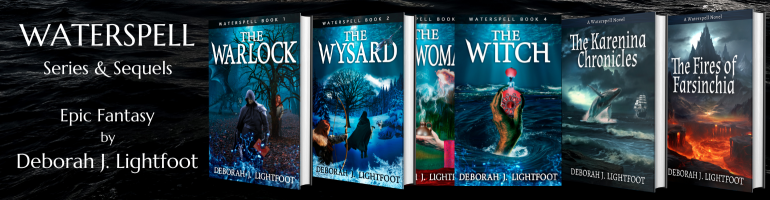
The Original Waterspell Quartet
The Waterspell Linked Sequels
Showcasing a Series
I seldom find any reason to praise Amazon, but I do like the new modules that authors can customize for our books’ A-Plus Content. The ability to assign multiple ASINs to each module is extremely valuable for showcasing a series. The four-book image, WATERSPELL Fantasy Series, shows up on each of those four individual book pages and also on the related page for the boxed set. The two-book image shows up on The Karenina Chronicles page and again on The Fires of Farsinchia page. Grouping the books in this way gives the reader a visual summary of the quartet (which is really one long story told in four volumes), and then the two-book image ties together the linked sequels that tell of Nina’s homecoming and her further adventures.
I don’t know whether this new A-plus content will make the books more visible at Amazon, or affect their ratings, but I like how the modules look on the individual book pages. Over time, I may further refine the content. As a product of a couple hours’ work, however, these three modules present my books in a way that satisfactorily makes the connections among them more obvious to the casual book-shopper. That’s a plus, indeed.
5.0 out of 5 stars Another brilliant book from Deborah J Lightfoot! Reviewed in the United Kingdom on March 20, 2026 Format: Kindle Verified Purchase
Deborah J Lightfoot’s work is always a must read for me, and I have hugely enjoyed every one of her previous books. These have all taken place in her world of Ladhredin, a world that has become very real to me through the pages of her books. This new work, Adverse Reactions is a new departure for her, and an entirely new world is introduced to the reader. I was at once excited and intrigued by this, keen to see where Lightfoot would take me next. It’s fair to say that the world she creates is very different to Ladhredin, with magic playing no explicit part. Instead, paranormal ability takes the place of magic and lies at the core of the book. World building is skilfully managed, with the history, the land and the people introduced on a ‘need to know’ basis, so that the world is brought to us incrementally as the pages turn. I found this to be a very satisfying approach, and one which certainly engaged my interest throughout.
Our main protagonist, Devin, is herself in a process of self-discovery, which proceeds alongside this gradual revelation of the world she lives in. I found her story to be fascinating, her discovery of her own abilities and the revelation of her life history most engaging. In order to discover her true self she negotiates a precarious and engrossing path amongst characters who will variously support or challenge her as the story progresses. Devin has suffered terrible injustices and the manner in which she addresses these through the use of her developing paranormal powers is highly satisfying to the reader.
There is an exceptionally strong cast of characters in Adverse Reactions. The wholesome purity of some key relationships is balanced by Devin’s dealings with some very complex individuals, ones whom the reader is kept wondering whether they truly represent enemy or ally. In summary, Adverse Reactions is a thoroughly engrossing read, that offers some hints that there may be more to come from this context. I hope there is!
Thank you so much, Alex! 💙 I’m enormously grateful for your kind words and fabulous review. 🎉
They destroyed her mind, hunted her kind, and left her powerless. They should have made sure she couldn’t come back.A post-apocalyptic dystopian standalone from the author of Waterspell. “Immediately immersive”
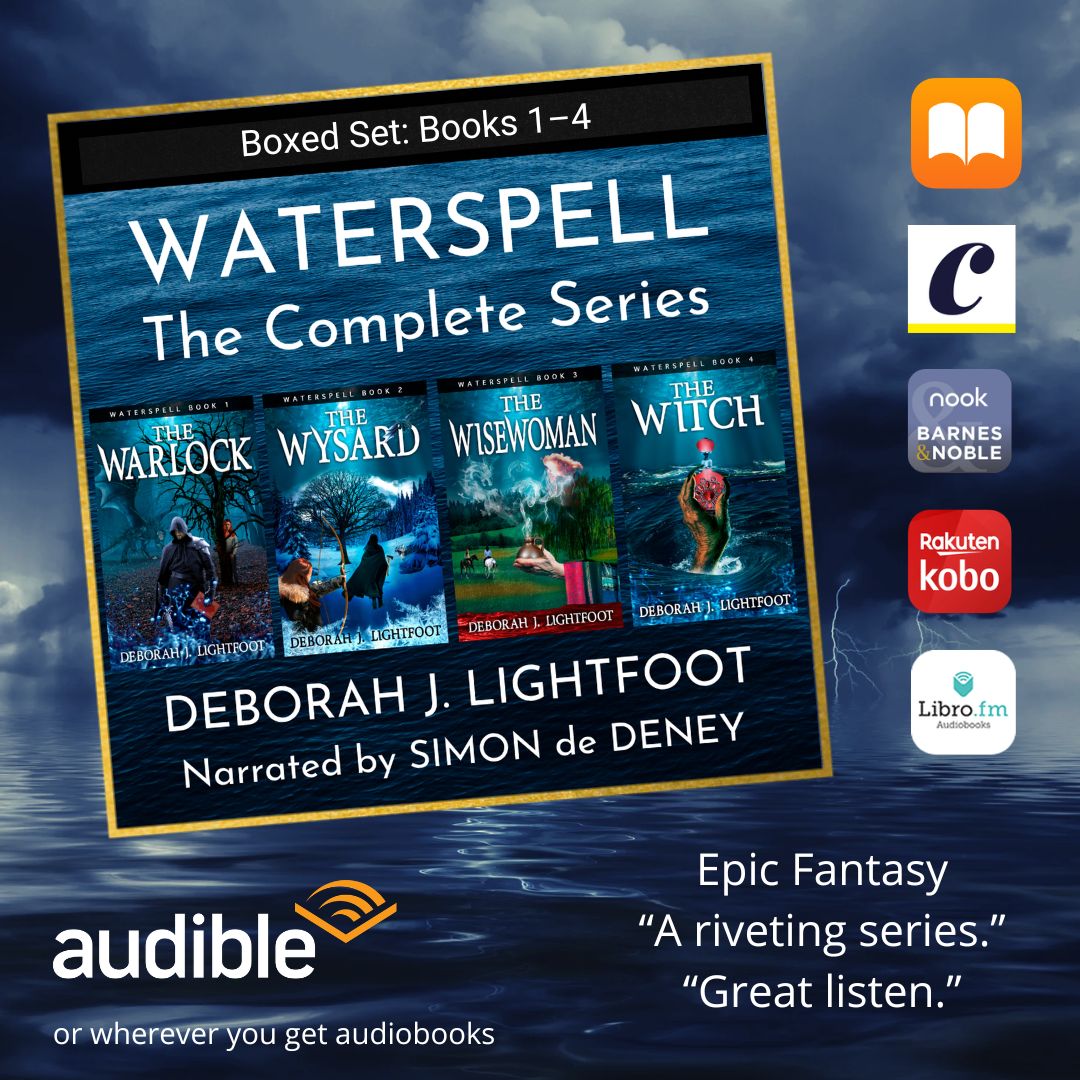
WATERSPELL In a world where you don't belong, making a place for yourself takes courage. So does moving in with a warlock.
“Best audiobook series I’ve ever listened to.”—Google Audio
“An entertaining, fast paced, and well-plotted fantasy series. The world building is fascinating, and the characters fleshed out. Highly recommended.” —Anna Maria, NetGalley
“A must-read for fantasy enthusiasts who enjoy immersive world-building, well-developed characters, and a storyline that seamlessly blends magic and human emotion.” —Dalton, NetGalley
“Complicated characters, plot twists, romance, adventure, and magic — all written in a voice that immerses you in a fantasy world both foreign and familiar. Get the box set because you won’t want to leave this world.” —Beck Digs It, Amazon
“An extraordinary book, four in fact! I read these over a five-day period and found the storytelling fantastic. See for yourself!” —Michelle, NetGalley
“In this four-book saga, the author has created an epic fantasy world full of magic, danger, romance, and travel through time and space. The characters are vivid and complex. This is a most enjoyable read for fans of fantasy and fine writing.” —Shirley, NetGalley
“I was HOOKED. I read until 3 am two nights in a row to finish this. The magic system is unique and the characters are as morally gray as they come.” —Megan, Goodreads
“I absolutely loved all four books! You kept your storyline throughout the four books brilliantly. The characters were all genuine and relatable.” —Carol, Goodreads
“Jane Eyre meets Beauty and the Beast. Amazing story, very original. Great series.” —Emma, Amazon UK
“A great read that features world building with drama and magical characters. Highly recommended.” —Neil, Amazon
“I was hooked instantly. I willingly gave up sleep and could not wait to get up to read more. I’m reading the whole series, and absolutely loving it.” —Sarah, Amazon
“Such a joy to narrate this. It didn’t feel like work. The story and characters take flight so naturally and then soar.” —Simon de Deney
“Captivating. I loved this series from beginning to end. Complex characters who mature through the series and unexpected plot twists kept me reading far too late into the night.” —Amy, Amazon
“Lightfoot has a sure touch with regard to characterisation. Each of her characters has their own authentic and convincing voice. Narrative, description and speech are exceptionally well-balanced.” —Martin Dukes, author of the Alex Trueman Chronicles
“A riveting series. Well written, excellent world-building with an engaging plot in each book and well-developed characters. I was gripped right from the start with twists I didn’t see and unpredictability.” —Aria, NetGalley
“Addictive epic fantasy, with drama and adventure. I binged through the books, eager to see how the story unfolds. Great book. 5 stars.” —Di, NetGalley
You won’t want to leave this world.
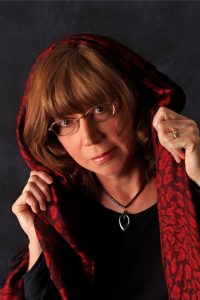
Castles in the cornfield provided the setting for Deborah J. Lightfoot’s earliest flights of fancy. On her father’s farm in Texas, she grew up reading tales of adventure and reenacting them behind ramparts of sun-drenched grain. She left the farm to earn a degree in journalism and write award-winning books of history and biography. High on her bucket list was the desire to try her hand at the genre she most admired. The result is Waterspell, a multi-layered, intricately detailed fantasy about a girl and the wizard who suspects her of being so dangerous to his world, he believes he’ll have to kill her … which troubles him, since he’s fallen in love with her. Deborah is a professional member of The Authors Guild. She still lives in rural Texas.
Magic, mystery, murder, and romance. Waterspell: An intricate save-the-world fantasy adventure with complex characters, cosmic calamities, and the gothic sensibilities of Jane Eyre.
Mix environmental fantasy with magic, mystery, and a little slow-burning romance, add dystopian undercurrents, and that’s the Waterspell series—a cross-genre story with too many layers for a single label.




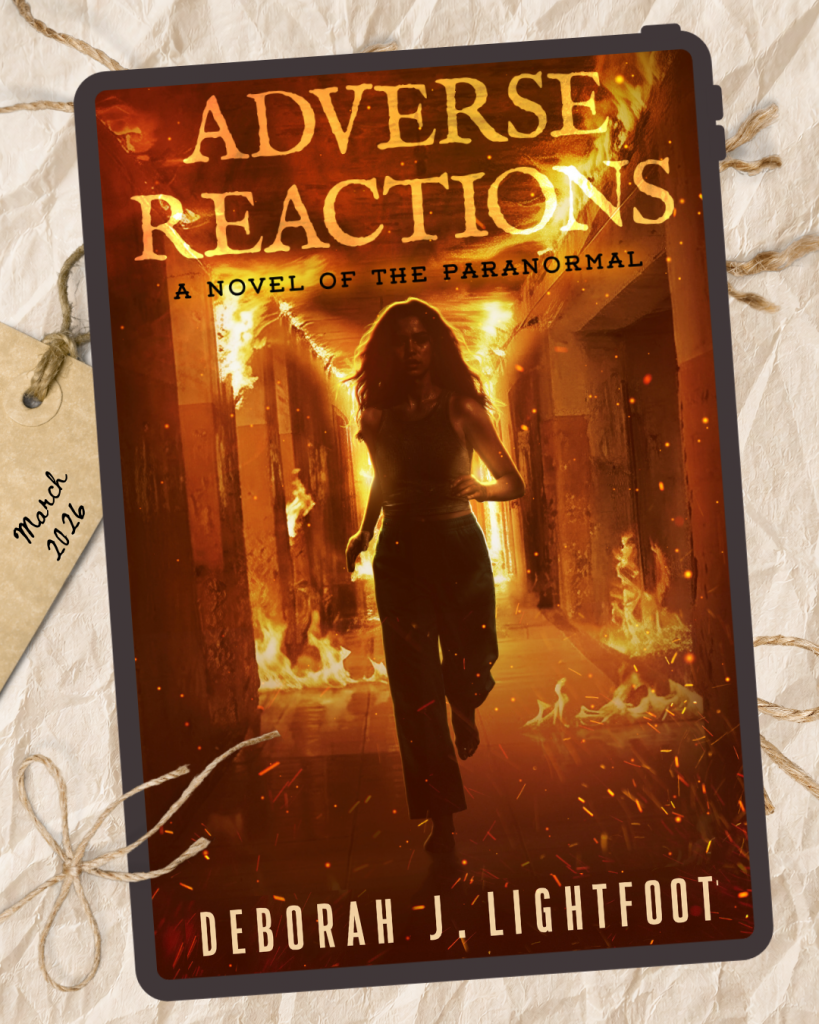
 “Immediately immersive”