Here’s my annual analysis of my marketing efforts. This is pretty much all that I do in the way of marketing: I run a promo every month in a different email/newsletter.
The bar graphs are screenshots from my Amazon KDP reports. Each blue bar shows the total number of books that were ordered that month. Since I have a six-book series, the full-series promo at Written Word Media always brings in the most orders. A full-series promo is pricey at $170, but cost-effective for promoting the six books all at one time. Once they start reading, people tend to buy every book in the Waterspell series. Thank you, dear readers!
In 2024, I again branched out from my regulars (Book Barbarian, Fussy Librarian, Written Word Media, Hello Books, and EReader News Today). I added Robin Reads to the rotation, and it did well. I discovered Robin Reads via this handy, helpful list of Recommended Book Promo Sites by Nicholas Erik. Thank you, Nicholas!
My Bargain Booksy experiment (February 2024) was a flop because I did not discount The Karenina Chronicles from its list price of $3.99. I thought that was a bargain price already, but Bargain Booksy subscribers disagreed. The next time I try it, I will drop the price to $1.99, which is as low as I go.
I hate marketing and I’m really bad at it. Running paid promos in newsletters is the easiest and most effective approach I have found. Most of these promos cost $45 to $65. I budget to run one a month (rotating among these sites, and sometimes doubling up with less-expensive ads at BookDoggy and ManyBooks). When funds allow, I splurge on a $170 Written Word Media full-series promo.
What promo sites do you recommend? What have your experiences been with pay-per-click ads at Amazon, BookBub, and Facebook? I have tried those, but I’ve found them to be way overpriced and ineffective for my books.
Regularly updating one’s author bio is an entirely tedious but necessary part of the interconnected online world. Every time I have a new book coming out (and I do! November 19!) I chase down all of the sites where my little biography appears. I’ve now spent the better part of a week doing this mind-numbing task.
In hopes of simplifying the process for any necessary future updates, I’ve created a list. Google finds most of these, but not all. Some of the more obscure locations were sporting badly outdated info. With this list to remind me, perhaps I’ll more easily catch them all, the next time I must refresh my online presences. (“What has it got in its presences?”)
Also my distributors, Draft2Digital and Lightning Source, so that booksellers who use their databases will pick up the most recent author info.
Also Google Play Books (the catalog of which, like Lightning Source, must be updated individually <sigh> since the Google Partner Center does not have one universal Author Profile option that applies to every book in an author’s catalog):
With this many individual places to update, you would think that I’d be absolutely certain of the wording I want in my “official author bio.” But after a week of updating myself everywhere, I’m already wondering if I’ve included too many details, and will the info be stale before my coffee gets cold? <sigh>
Author Bio: Deborah J. Lightfoot
Castles in the cornfield provided the setting for Deborah J. Lightfoot’s earliest flights of fancy. On her father’s farm in Texas, she grew up reading tales of adventure and reenacting them behind ramparts of sun-drenched grain. She left the farm to earn a degree in journalism and write award-winning books of history and biography. High on her bucket list was the desire to try her hand at the genre she most admired. The result is Waterspell, a complex, intricately detailed fantasy comprising the original four-book series (Warlock, Wysard, Wisewoman, Witch). In the “Nina sequels” to that earlier quartet — The Karenina Chronicles and The Fires of Farsinchia — new generations of powerful wysards carry the saga into the magical future of an ancient world. Having discovered the Waterspell universe, the author finds it difficult to leave.
Lightfoot is a professional member of the Authors Guild. She still lives in rural Texas. Find her on Instagram @booksofwaterspell and explore her overflowing, catch-all website at waterspell.net.
“What to do with too much information is the great riddle of our time.” Theodore Zeldin
As I work back through my old notes for my novel-in-progress—notes scribbled on scraps of paper, some dating back a year—I find bits that I’m not sure can be incorporated sensibly into the Fires manuscript, but I’m reluctant to trash these bits. Therefore, I’m saving them here, just in case I’m inspired to use them in my final editing passes. “Kill your darlings,” they say. Eliminate any part of your writing—scenes, sentences, descriptions—that you love, but which don’t serve your story. I’m not ready to decapitate the following, so they’ll stay here for now, awaiting their fate.
On the Void’s Time-Warping
In reality, all of her siblings were now older than Nina. She had lived most of her life in a world where time passed far more slowly than on Ladrehdin. She was now, practically speaking, the baby of the family. But she’d never admit that, for Nina would never cease to take pride in being the eldest daughter of House Verek.
On Nina’s Permanent Departure from the Island World
… what Willow had said about Legary’s children from his first marriages to mortal women, how his offspring had grown to resent him for never growing old or leaving them an inheritance. Nina’s own descendants on the island world were now many generations removed from their matriarch. They had the family house on the bay and the magian vigor of their inheritance, and they needed her no longer.
Where Is Nina’s Sword?
Nina’s rapier figured prominently in The Karenina Chronicles (Waterspell Book 5). But in The Fires of Farsinchia (Book 6), it’s nowhere to be seen. That’s because, at the end of KC, Nina had left it at home in Ruain. Thus, she doesn’t have it with her when she makes the leap back through the void to the Ore Hills, at the beginning of Fires.
Her rapier was at home in Ruain. Nina had not worn the blade when she crossed from Weyrrock to the islands beyond the void. Her other weapons—bow, sling, and throwing knife—had had their uses in that distant world, but her rapier would always have been out of place, too different from any weaponry that was commonly known in the archipelago. But here in the desert of Ladrehdin, she missed it. Perhaps Dalton could eventually collect the weapon from Weyrrock, bring it to the port city of Seawood, and send it by messenger to Legary at Granger. Nina could then retrieve it from Legary, the next time she visited her brother at his home in the southern grasslands.
On Wolfram as Courier
Wolfe is only the second courier ever admitted into Ruain on behalf of Galen. Remember that Galen sent a messenger many years ago, bearing a bracelet for Carin and a cloak pin for Verek. That rider (in Book 4) had been a wandering wysard from the mountains, known to Galen’s master, Orton the Smith.
A novel is like an iceberg. Much of the story is out of the reader’s sight, known to the author but hidden in the depths.
Here’s my annual analysis of my marketing efforts. This is pretty much all that I do in the way of marketing: I run a promo every month in a different email/newsletter.
The bar graph is screenshot from my Amazon KDP reports. Each blue bar is the total number of books that were ordered that month. Since I have a five-book series, the full-series promo at Written Word Media always brings in the most orders. People tend to buy every book in the Waterspell series. I love my readers. 💙
In 2023, I branched out a little from my regulars (Book Barbarian, Fussy Librarian, Written Word Media). I added Hello Books to the rotation, and will continue to use them. EReader News Today was also new on my list in 2023, and it did well. GoodKindles, however, was a complete bust. They’re off my list forever. With BookRaid, I have seen diminishing returns over the two or three years that I’ve been advertising there. Not sure they’re worth the money any more.
A full-series promo at Written Word Media continues to deliver the best results. It’s pricey at $170, but cost-effective for promoting the five books in the Waterspell series all at one time. Written Word Media offers several promo options. I tried their “Readers’ List” promo for the first time in August 2023, with disappointing results. Even combined with a concurrent Book Barbarian promo, the $125 “Readers’ List” email blast failed to produce the number of book orders that the $170 full-series promo brought me.
To summarize, this is how I’ll rank the effectiveness of these sites, in terms of the book orders they brought me at Amazon and how much I paid for each promo:
To see how my choices and experiences have evolved over time, you can look at my earlier posts on this subject — 2022’s Book Promotion Sites: Ranked, and back to 2021 when I was Focusing the Plan.
Since I hate marketing and I’m really bad at it, running promos this way is the easiest and the most effective approach I have found. Most of these promos cost $45 to $65. I budget to run one promo a month (rotating among these sites, and sometimes doubling up with less-expensive ads at BookDoggy and ManyBooks). Occasionally I splurge on a $170 Written Word Media full-series promo. I was an election clerk in November 2023 and got paid $188 for the day’s work. That will buy a promo. 😁
What promo sites do you recommend? What have your experiences been with pay-per-click ads at Amazon, BookBub, and Facebook? I tried those, but I found them to be way overpriced and ineffective for my books.
Readers who have followed my writerly journey will remember that I hit a dry spell between 2012 and 2020. I wasn’t writing during those years. Promoting my work was the last thing on my mind. I was emotionally, mentally, and physically unavailable for any kind of bookish event.
Which is why I was both excited and nervous about participating in an author event sponsored by the local public library. It wasn’t just a book-signing opportunity. The 10 participating authors also presented a mini-workshop on Getting Started Writing, Overcoming Writer’s Block, Avoiding Common Errors, and Getting Published.
Nerves and eagerness led me to over-prepare, as I do. I had new posters printed for my book table. I obsessed over what I should wear. I actually practiced—in front of a mirror—my five-minute talks on two of those topics.
It all went fine, of course. Book-signings and writing workshops are like riding a bicycle: once you learn, you don’t forget. I fell back into it like the old pro I am. Prior to 2012, I’d done a bunch of author events and writing conferences.
Here are a few pictures from my “comeback.” It was fun, and I’m glad to go back on the circuit.
Almost wore a turtleneck sweater to look more “writerly.” Good thing I didn’t. The room was hot. I was soon in shirtsleeves.
A reader! A book buyer!
My potions bottle, a prized possession.The swag and books I got home with.
The dress rehearsal of my table. I laid it all out in my dining room a few days before repeating the exercise at the library event.
Dialogue should sound natural—like real people talking. Or more precisely, like really interesting real people talking.
Strive to write dialogue as the natural outcome of the characters’ needs, desires, thoughts, personalities, reactions, and relationships. Don’t use it to dump information on the reader or, even worse, use it just to break up long passages of narrative.
Avoid commonplace dialogue—characters taking up space saying empty things like “Hi, how are you?” and “Fine, how are you?”
“The presence of commonplace dialogue means the manuscript as a whole will need a lot of cutting: if there is one extraneous line of dialogue on the first page, by the rule of manuscripts, you will also find one extraneous line on each page to come.”
According to Lukeman:
“Dialogue is a powerful tool, to be used sparingly, effectively and at the right moment.”
I greatly admire Ursula Le Guin. (If you don’t know her work, read the Earthsea books—you’ll be swept away.) For examples of pitch-perfect dialogue, see her Tales From Earthsea. Below is an excerpt. Study it and see all that it does, the many levels on which this dialogue succeeds.
We learn the personalities of father and son. The son is quiet, he doesn’t say much. He’s subject to his father’s will, but he’s hoping his old man will stop pressuring him. The father is obviously conflicted: proud of his son’s gift, but disappointed that it doesn’t make the boy suitable to follow in his dad’s footsteps in the family business. The father is also in awe of his child’s talents. We learn so much from this dialogue, and the whole exchange rings true. Believable personalities are revealed.
Also study this passage for examples of how to punctuate dialogue, and how to break up the speaking with a little action. People move around, gesture, pause. They don’t just stand and talk.
The next morning Golden told his son again that he must think about being a man.
“I have thought some about it,” said the boy, in his husky voice.
“And?”
“Well, I,” said Diamond, and stuck.
“I’d always counted on your going into the family business,” Golden said. His tone was neutral, and Diamond said nothing. “Have you had any ideas of what you want to do?”
“Sometimes.”
“Did you talk at all to Master Hemlock?”
Diamond hesitated and said, “No.” He looked a question at his father.
“I talked to him last night,” Golden said. “He said to me that there are certain natural gifts which it’s not only difficult but actually wrong, harmful, to suppress.”
The light had come back into Diamond’s dark eyes.
“The master said that such gifts or capacities, untrained, are not only wasted, but may be dangerous. The art must be learned, and practiced, he said.”
Diamond’s face shone.
“But, he said, it must be learned and practiced for its own sake.”
Diamond nodded eagerly.
“If it’s a real gift, an unusual capacity, that’s even more true. A witch with her love potions can’t do much harm, but even a village sorcerer, he said, must take care, for if the art is used for base ends, it becomes weak and noxious … Of course, even a sorcerer gets paid. And wizards, as you know, live with lords, and have what they wish.”
Diamond was listening intently, frowning a little.
“So, to be blunt about it, if you have this gift, Diamond, it’s of no use, directly, to our business. It has to be cultivated on its own terms, and kept under control — learned and mastered. Only then, he said, can your teachers begin to tell you what to do with it, what good it will do you. Or others,” he added conscientiously.
There was a long pause.
“I told him,” Golden said, “that I had seen you, with a turn of your hand and a single word, change a wooden carving of a bird into a bird that flew up and sang. I’ve seen you make a light glow in thin air. You didn’t know I was watching. I’ve watched and said nothing for a long time. I didn’t want to make too much of mere childish play. But I believe you have a gift, perhaps a great gift. When I told Master Hemlock what I’d seen you do, he agreed with me. He said that you may go study with him in South Port for a year, or perhaps longer.”
“Study with Master Hemlock?” said Diamond, his voice up half an octave.
“If you wish.”
“I, I, I never thought about it. Can I think about it? For a while — a day?”
“Of course,” Golden said, pleased with his son’s caution. He had thought Diamond might leap at the offer, which would have been natural, perhaps, but painful to the father, the owl who had — perhaps — hatched out an eagle.
(From “Darkrose and Diamond,” Tales From Earthsea, copyright 2001 by Ursula K. LeGuin)
They’re inevitable. Every writer gets them. Even rich and famous authors get bad reviews.
Some of the best advice I’ve ever read, on how to handle the trolls, comes from Julia Whelan at Writer Unboxed. I excerpted some of her comments to give ’em the Canva treatment. But every writer will do well to read her entire post.
Julia Whelan is a screenwriter, lifelong actor, and award-winning audiobook narrator of more than 500 titles. Her performance of her own debut novel, the internationally best-selling My Oxford Year, garnered a Society of Voice Arts award. She is also a Grammy-nominated audiobook director, a former writing tutor, a half-decent amateur baker, and a certified tea sommelier. Her new book, Thank You for Listening—about a former actress turned successful audiobook narrator who has lost sight of her dreams and her journey of self-discovery, love, and acceptance when she agrees to narrate one last romance novel—released in August 2022.
“Write every day” is standard advice to writers. We’ve all heard it. I used to feel guilty because I do NOT write every day. I regarded my failure to do so as … well, a failure.
Now I know better. After eight books with a ninth in progress, I know what pattern or schedule works for me. I’m a binge writer, an all-or-nothing kind of wordsmith. When I’m writing, I don’t want to do anything else except drink coffee, eat when I start getting the shakes, and sleep when I must. That kind of intensity is productive, but exhausting. I can only keep it up for three days. Then, I must have a break.
Today was my non-writing day of “rest.” I’ve spent it doing a bunch of things that writers must do:
Checked Goodreads for new reviews (and found a lovely one)
Checked on my audiobook sales via Findaway Voices (and found a good number of new sales)
Communicated with my local library about adding Waterspell to their catalog
Made a new Bookstagram graphic with the lovely Goodreads review
Wrote this blog post
Additionally, I fulfilled my obligations to a save-American-democracy group in which I’m active in the area of Communications. And: I watched the Jan. 6 Committee Hearing on PBS. Busy day!
Would I have wanted to break away from my work-in-progress to do any of these things? Absolutely not. I suppose there are writers who can write fiction for just 4 hours in a day, and then put the book out of their mind, to focus on such mundane tasks as I’ve listed above. I’m not one of those writers. A far more productive approach, for me, is to devote whole days at a stretch to my writing, and to nothing else.
At the end of three intense days, I’m totally ready to turn my mind to less taxing tasks. By the same token, after one or two days of necessary but boring administrative/business work, I’m eager to throw myself back into the world of my imagination.
“Write every day” is a recipe for burnout, in my opinion. If you’re really into the story and the people you’re writing about, your mind and psyche can’t keep you deeply “in character,” indefinitely. You need a break. You need to come up for air, and spend a little time away from the story so you can return to it, refreshed. And unless you’re able to afford a personal assistant who can handle all of your non-writing jobs, you need to set aside time to tackle your To-Do list.
Don’t cut into your writing time to do those boring jobs. Hold your writing days sacrosanct. Set your phone to Do Not Disturb and commit yourself to do nothing except Write.
But don’t “write every day.” You’ve got other things to do.
Recently I was asked if Instagram is good for writers. I believe it is. Or at least its “subsidiary,” nicknamed Bookstagram, works for me. I’m not on Twitter (I tried it but found it to be too frantically noisy). I’m suspicious of TikTok, which the FCC calls a national security threat. Besides that, I have neither the time nor the inclination to make a bunch of videos, not even bookish videos, and certainly not silly vids. As for Facebook: Fewer than 100 people follow my FB author page, and that number hasn’t changed in more than a year. Facebook’s algorithms work hard to keep your posts from being seen, if you don’t pay to boost your posts. And I don’t pay.
On Bookstagram, however, I quickly attracted 900 followers (for free!), and that figure increases weekly. They’re all bookish people, a curated population of readers, writers, teachers, librarians, publishers, and bookstore owners. The collaborative connections I’ve made there have resulted in several very nice reviews of my books, and in turn I’ve been introduced to the work of authors from all over the world. My ebook library now overflows with books I plan to read and review, to support other authors as many Bookstagrammers have supported me.
Bookstagram Pointers
Tips for Starting a Bookstagram covers nearly everything a newbie should know about launching a Bookstagram account and interacting with other book people. To that resource, I’ll add the following points, things I’ve learned in my year there:
Engagement is key. If you want people to like and comment on your posts, you must like and comment on theirs. Like all social media, Bookstagram can be an enormous time sink. You mustn’t let it take over your life, but you do need to set aside time for not only your own posting, but also for interacting with other people’s posts. I tend to peruse my Bookstagram feed during my coffee and lunch breaks, and sometimes in the evening when I should be reading.
Canva is your friend. I’m not much of a photographer, and my aging Android phone doesn’t take especially good pictures unless the scene is perfectly lit. To get around that deficit, I use Canva heavily. I’ll spend an entire day creating Instagram posts at Canva, using the covers of my books and incorporating the nice reviews that I quote or screen-shoot from Amazon, Goodreads, etc. Creating Bookstagram content can take quite a lot of time, but I enjoy playing with designs at Canva, seeing how creative I can get. (Pictured is one of my recent designs, to promote the new Waterspell audiobook.) For me, Canva and Bookstagram together have become a fun way to showcase a different side of my creativity. If the words aren’t flowing during a writing session, I can go to Canva and play with pictures, and still feel like I’m being productive.
Mix it up. My pattern is to alternate promos of my own books with quotes from famous authors, or writing-related memes, or the occasional review that I’ve written for somebody else’s book or audiobook. Over the course of years, I filled thick notebooks with admirable examples of other people’s writing, or with the wise words of established authors. Those notebooks have been a rich source of inspiration for my bursts of creativity at Canva. My Bookstagram followers always respond warmly to the quotes I share. Every writer needs a regular shot in the arm, an almost daily reminder that what we do, does matter. And that we’re not alone. Even famous authors have bad days and get one-star reviews or draw the ire of book-burners. Hardly a day goes by that I don’t see something inspirational on Bookstagram, something that validates me as a writer. The writers and artists who are active there support each other, celebrate each other’s successes, and commiserate with the setbacks.
Once a day is plenty. There seems to be a general consensus among Bookstagrammers that it’s poor form to post more than once daily. Which suits me fine. Only on rare occasions do I violate that unwritten rule. Many Bookstagrammers post only weekly, or 2–3 times a week.
Block the spammers and bots. Newcomers to Bookstagram are instantly deluged with “Promote it on” scams. Every one of those fake accounts uses the same wording — “Promote it on” — typically followed by some variation of “Writers Heaven” or “Writers Paradise.” (The bots aren’t imaginative.) To fend them off, go into Settings, find Privacy & Security, find “Edit comment settings,” and find Comment Filtering, where you can list Hidden Comments. There, paste the following list of terms that the scammers use. You’ll need to add new terms to the list from time to time, as the scammers tweak the wording (“Writers Heaven” becomes “Heaven of Writers”). As one of your first steps, however, when you create your new Instagram account, put the following terms in your “Hidden Comments” list, and you’ll vastly reduce the amount of junk that floods in from bots and scammers. Eventually, as they figure out you’re not going to pay them to “review” your book, the scammers move on to more gullible writers.
As other thoughts occur, I may add to this post. For now, however, those are my main bits of advice for Bookstagram newcomers. I believe you’ll find, as I did, that it’s a welcoming community. Most of the writers and readers who are active on Bookstagram will follow you back, if you follow them. That reciprocity makes it fairly simple to grow your followers, in very little time, from zero to hundreds or even thousands.
I’ve been fairly selective about who I follow, being mostly interested in connecting with readers who might enjoy my books, and also with writers who work in my genre: traditional fantasy. I don’t follow many writers of urban fantasy, for instance, because I’m not trying to reach that specific audience. What works for them, in the way of promotion or reader engagement for instance, won’t necessarily apply to my efforts. From authors of epic or high fantasy, however, I’ve picked up many useful tips. I’ve learned about tropes and book blurbs and keywords. I’ve learned about online fantasy map generators, which is a new skill I really want to master.
In turn, I’ve shared what I’ve learned about cost-effective book promotion. Pretty much the only time anyone reads this blog is when I share something on Instagram about my book-promo efforts, and I invite my IG followers to learn more at my blog. That’s when I get eyes on posts such as Book Promotion Sites: Ranked and its followup, Book Promo Overview. I’m glad to know that other writers are benefiting from my experiences in the often predatory and potentially expensive world of book marketing.
If you’re an author on Bookstagram, I’d love to hear from you. Please drop your comments in the box below. I have a huge amount to learn about that platform, and I welcome the advice of more experienced Bookstagrammers. Please comment, too, if you’re just getting started. I’ll do my best to answer your questions, or to refer you to more authoritative resources.
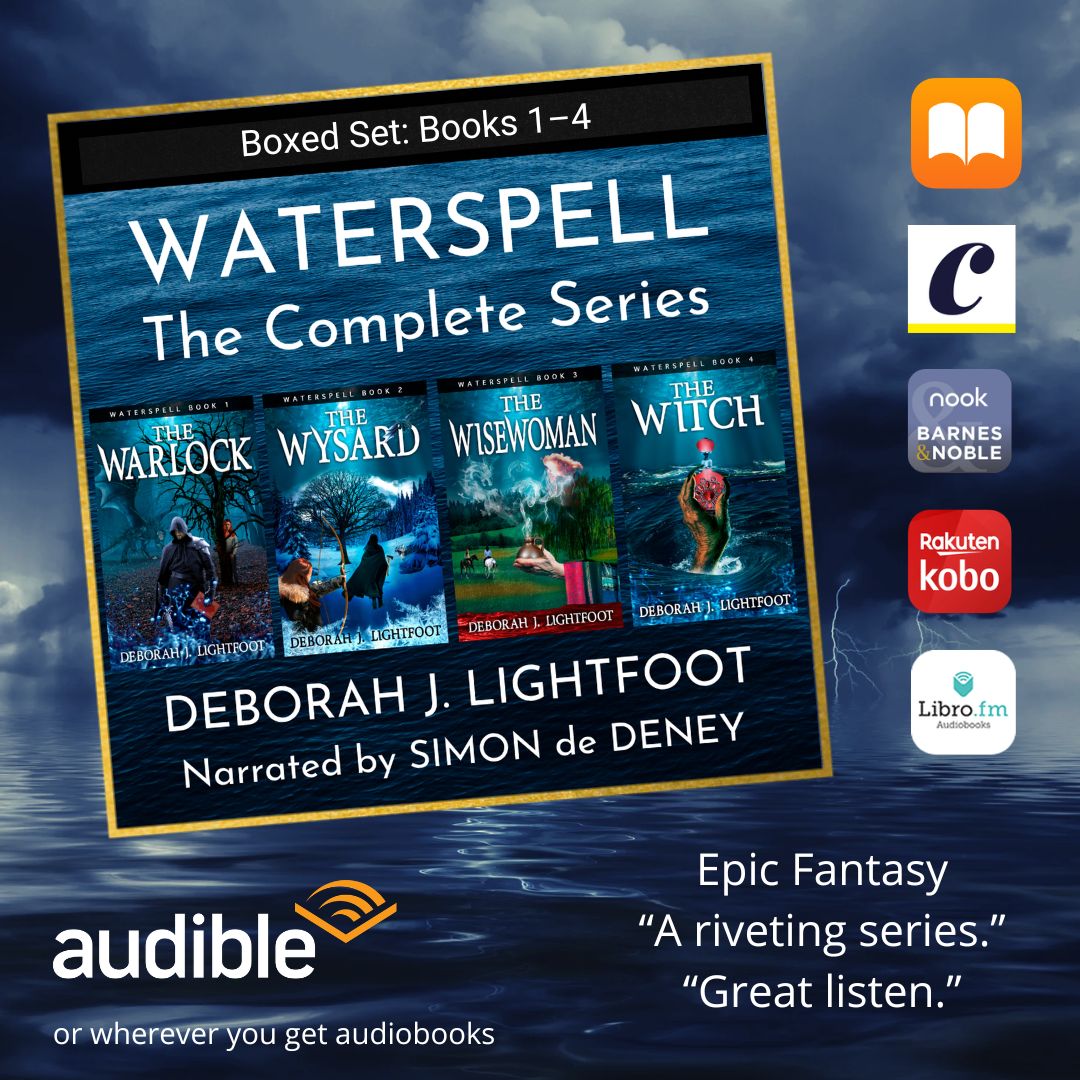
Releasing June 1, 2022 WATERSPELL: The Complete Series Audiobook
Am I excited!? Just a little. Well, a lot actually.
This new audiobook is the culmination of decades of work. I started writing Book 1 of Waterspell so long ago, the story seems to have always been in my life. In a sense, I suppose it has been in my life since I learned to read in my childhood. Everything I’ve ever read has probably found its way into this series, in some fashion or other.
But that’s true for all writers, I imagine. We are products of the life we’ve lived, the people we’ve known, the education we’ve received, the work experiences we’ve had, and perhaps most of all the books we’ve read. We write what we know.
Waterspell is deeply personal for me, however. I remember my doubts and my uncertainty as I began the switch from nonfiction to fantasy. As a trained journalist and an award-winning author of history and biography, I wasn’t even sure I could write fiction. Did I know how? I had much to learn, and attentive readers can follow my learning curve through the series. Wordiness, for instance, was my painfully clear weakness in Books 1 and 2. That fault is less apparent in Books 3 and 4.
Our house in Mexico on Lake Chapala
During my years of work on this story, I not only grew as a writer, I gained a deeper sense of my place in the universe. A huge amount of the writing was done while my husband and I lived in Mexico, in a house that I loved, prettily situated on the south side of Lake Chapala, south of Guadalajara. Our time in Mexico was a highlight of my life, an intensely creative eight years. Amid the tropical flowers and greenery that surrounded our house, I gave myself to my writing, tapping my deep subconscious during those quiet nights by the lake, disturbed by nothing, visited by only owls and inspiration.
My beloved husband holding a fuchsia for me to photograph in our Mexican garden
After we left Mexico, another seven years would pass before Books 1–3 of Waterspell were published. And then, to my horror, my husband died quite suddenly and unexpectedly, only two months after Book 3 was released. I have written elsewhere about the effects of my grief on my writing; I will not elaborate here, except to say that my husband’s death is, for me, inextricably woven into the very fabric of this series. It is chief among the reasons for my deep personal investment in this story.
The Gift That Started Things Off …
All of this history will perhaps explain why I’m so joyously, deliriously excited about the new audiobook. Readers had been asking me for an audiobook, but I thought the expense of such an undertaking would be beyond my reach. I resisted the idea of even investigating the possibilities, until my sister-in-law gave me an Audible membership for Christmas. The first thing I bought was Lord of the Rings, narrated by Rob Inglis.
What a revelation! A great work of fantasy was elevated, by a masterful job of narration, to a plane of perfection almost beyond my comprehension. That was when I knew I had to pursue an audiobook of my own series, and damn the cost.
… And Now Here We Are
Here we are, on June 1: Release Day! I can hardly wait for the world to hear Simon de Deney’s wonderful work on Waterspell: The Complete Series. I love how Simon connected with the characters. I am deeply grateful that he took on this big project, that he liked the story and my writing, and was willing and able to produce 51 hours of narration. Not a small undertaking! I feel honored to have an actor of Simon’s reputation narrating my novels. 💙
Simon de Deney is a professional actor, playwright, director, and audiobook narrator with more than 25 years of broadcast experience and a wide range of acting credits, from feature films to shows in London’s West End. His audiobook work includes Flames Over Frosthelm (Dave Dobson), It Calls from the Forest (multiple authors), and The Story of Wine (Hugh Johnson), for which de Deney was nominated for Best Performance (Factual Audiobook) in the 2022 One Voice Awards (UK). As a writer, de Deney has had several BBC Radio commissions, including “The Way It Is” and “Future Perfect.” He has developed and directed new plays including “Broken Voices,” “Scotch and Water,” and “Late Fragment.” His acting credits include (theatre) “The Madness of George Dubya,” “The Prisoner of Windsor,” “Beneath The Waves,” and “Felix,” as well as television roles in “House of Elliot,” “The Upper Hand,” and “Rose Cottage.” His film credits include Damage, Shining Through, Another Country, and The Selfish Act of Community. Simon de Deney has a Master of Arts degree in Politics, Philosophy and Economics from Oxford University. He lives in London.
This being my first audiobook, I’m not sure what to expect. Will it suddenly just appear in the catalog of every retailer? It’s been available for pre-order at Barnes & Noble, Chirp, AudiobooksNow, and Libro.fm. It’s supposed to show up on June 1 at Apple, Kobo, Walmart, Overdrive, and many others including Audible. But I’ve been warned that Audible lags behind.
So check back here on my website for new links. I’ll post them as I get them.
I will have 100 Giveaway Codes to hand out. Drop me a note (below) if you’d like a free copy of this audiobook!
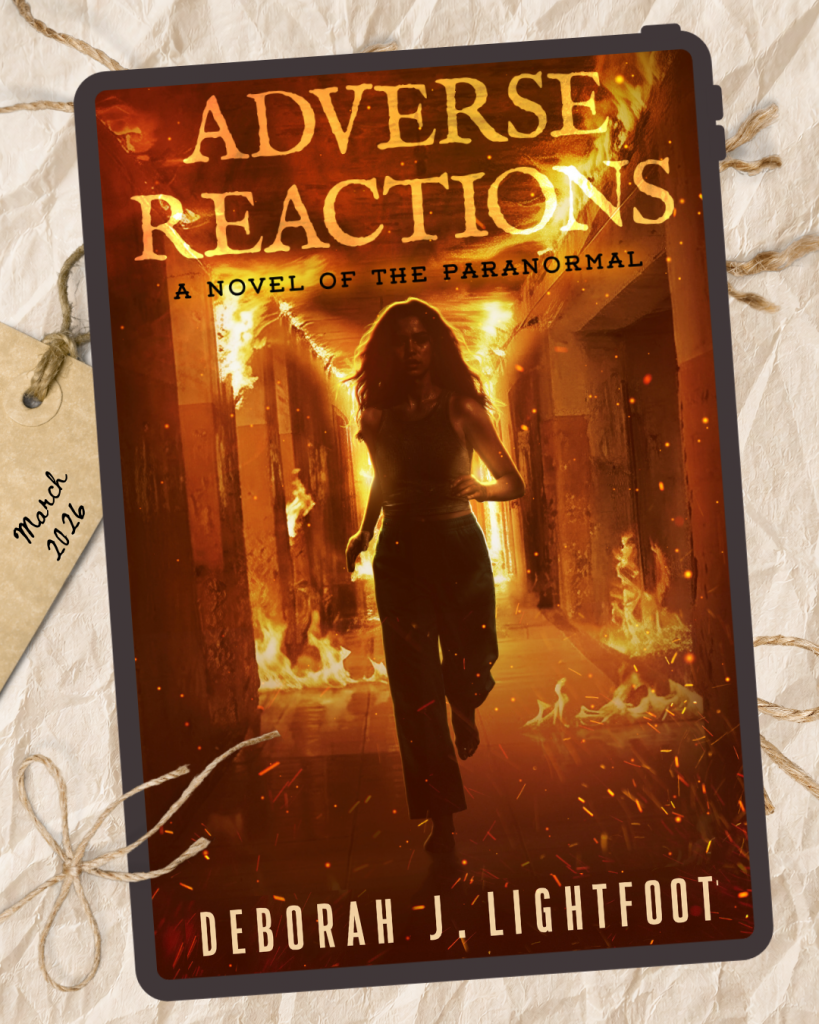
They destroyed her mind, hunted her kind, and left her powerless. They should have made sure she couldn’t come back.A post-apocalyptic dystopian standalone from the author of Waterspell. “Immediately immersive”
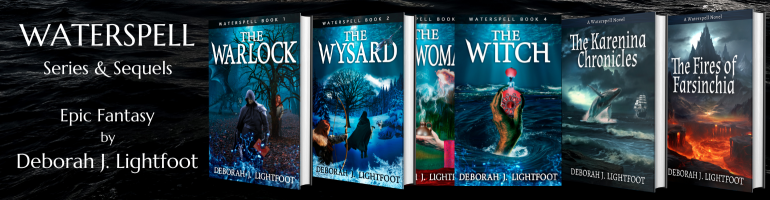
WATERSPELL In a world where you don't belong, making a place for yourself takes courage. So does moving in with a warlock.
“Best audiobook series I’ve ever listened to.”—Google Audio
“Such a joy to narrate this. It didn’t feel like work. The story and characters take flight so naturally and then soar.” —Simon de Deney
“I was HOOKED. I read until 3 am two nights in a row to finish this. The magic system is unique and the characters are as morally gray as they come.” —Megan, Goodreads
“A must-read for fantasy enthusiasts who enjoy immersive world-building, well-developed characters, and a storyline that seamlessly blends magic and human emotion.” —Dalton, NetGalley
“Jane Eyre meets Beauty and the Beast. Amazing story, very original. Great series.” —Emma, Amazon UK
“Complicated characters, plot twists, romance, adventure, and magic — all written in a voice that immerses you in a fantasy world both foreign and familiar. Get the box set because you won’t want to leave this world.” —Beck Digs It, Amazon
“An extraordinary book, four in fact! I read these over a five-day period and found the storytelling fantastic. See for yourself!” —Michelle, NetGalley
“A great read that features world building with drama and magical characters. Highly recommended.” —Neil, Amazon
“Lightfoot has a sure touch with regard to characterisation. Each of her characters has their own authentic and convincing voice. Narrative, description and speech are exceptionally well-balanced.” —Martin Dukes, author of the Alex Trueman Chronicles
“I was hooked instantly. I willingly gave up sleep and could not wait to get up to read more. I’m reading the whole series, and absolutely loving it.” —Sarah, Amazon
“Captivating. I loved this series from beginning to end. Complex characters who mature through the series and unexpected plot twists kept me reading far too late into the night.” —Amy, Amazon
“I absolutely loved all four books! You kept your storyline throughout the four books brilliantly. The characters were all genuine and relatable.” —Carol, Goodreads
“In this four-book saga, the author has created an epic fantasy world full of magic, danger, romance, and travel through time and space. The characters are vivid and complex. This is a most enjoyable read for fans of fantasy and fine writing.” —Shirley, NetGalley
“An entertaining, fast paced, and well-plotted fantasy series. The world building is fascinating, and the characters fleshed out. Highly recommended.” —Anna Maria, NetGalley
“Addictive epic fantasy, with drama and adventure. I binged through the books, eager to see how the story unfolds. Great book. 5 stars.” —Di, NetGalley
“A riveting series. Well written, excellent world-building with an engaging plot in each book and well-developed characters. I was gripped right from the start with twists I didn’t see and unpredictability.” —Aria, NetGalley
You won’t want to leave this world.
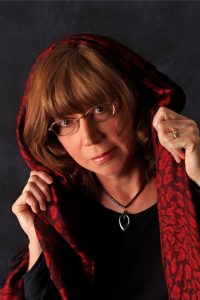
Castles in the cornfield provided the setting for Deborah J. Lightfoot’s earliest flights of fancy. On her father’s farm in Texas, she grew up reading tales of adventure and reenacting them behind ramparts of sun-drenched grain. She left the farm to earn a degree in journalism and write award-winning books of history and biography. High on her bucket list was the desire to try her hand at the genre she most admired. The result is Waterspell, a multi-layered, intricately detailed fantasy about a girl and the wizard who suspects her of being so dangerous to his world, he believes he’ll have to kill her … which troubles him, since he’s fallen in love with her. Deborah is a professional member of The Authors Guild. She still lives in rural Texas.
Magic, mystery, murder, and romance. Waterspell: An intricate save-the-world fantasy adventure with complex characters, cosmic calamities, and the gothic sensibilities of Jane Eyre.
Mix environmental fantasy with magic, mystery, and a little slow-burning romance, add dystopian undercurrents, and that’s the Waterspell series—a cross-genre story with too many layers for a single label.




 “Immediately immersive”