Category Archives: On Writing

The Fight Against Book Piracy

Authors and publishers have filed suit against book piracy entity Kiss Library,  obtaining a restraining order that requires domain registrars to disable the domains controlled by Kiss Library. Kiss is “a pirate online bookstore based in Ukraine that illegally sells pirated ebooks at discounted prices to unsuspecting U.S. readers. The defendants dress their websites up to make them look like sophisticated, legitimate sites, intentionally deceiving consumers who are unaware that authors, publishers, and legitimate booksellers are being denied their legal share of the sales price,” reports the Authors Guild.

“This filing joins together bestselling and emerging authors with industry leaders in a united fight against piracy,” said Mary Rasenberger, executive director of the Authors Guild. “Every purchase from an illegal piracy site represents a theft of earned income from the author and publisher, causing massive losses to the industry that, over time, will diminish the industry’s ability to publish a wide diversity of voices. This outright theft must stop.”

For more, see “AG Members Join Amazon Publishing and PRH in Suit Against Kiss Library” at News & Events, the Authors Guild.


Leave a Comment

Filed under Books and Readers, On Writing, Writers

Having Fun Again

How great it is to read that Far Side creator Gary Larson has published his first new cartoons in 25 years, and he’s sort of coming out of retirement – though with no deadlines. Larson said he is having fun, “exploring, experimenting, and trying stuff” – without the pressure of daily deadlines.

“So here goes,” he wrote. “I’ve got my coffee, I’ve got this cool gizmo [a digital tablet], and I’ve got no deadlines. And – to borrow from Sherlock Holmes – the game is afoot.”

While I’m not in the same league as Gary Larson, I completely identify with the delight he’s taking in all the creative potential contained in new technology. He wrote: “I hail from a world of pen and ink, and suddenly I was feeling like I was sitting at the controls of a 747. But as overwhelmed as I was, there was still something familiar there – a sense of adventure. That had always been at the core of what I enjoyed most when I was drawing The Far Side, that sense of exploring, reaching for something, taking some risks, sometimes hitting a home run …”

I feel the same way about my Waterspell books. I began writing the story in 1996. Created my first website for it in 2000, using what was then a modern app called Web Express. I attended writers conferences and pitched my books to various editors who invited me to submit the manuscript. Some of them never gave me the courtesy of any reply, afterward. Several did reply, but every one of them rejected it with some version of: “Definitely captures interest, it’s beautifully written, it’s very cinematographic” … but, “The first book of the series must be a standalone. We won’t commit to publishing all three books of a trilogy.”

In other words: Every major publisher who looked at it wanted to publish only the first book, and if it wasn’t immediately as profitable for them as the Harry Potter series, they’d kick me to the curb. I’d be on my own to publish Books 2 and 3.

That being the case, I decided my only rational response was to publish all three books on my own. How fortunate for me that I went the indie route! Have I made any money? Nope. My royalties have not come anywhere near covering the time and effort I’ve put into these books. But I’ve retained control, which has me in a great position to enjoy the benefits of new technology. Like Gary Larson, I’m having fun exploring modern tech’s creative potential, while freeing myself from deadline pressures.

The creative spark for my current project began in December 2019, when my sister-in-law gave me an Audible audiobook gift membership. I immediately downloaded The Lord of the Rings, the unabridged edition narrated by Rob Inglis.

My god! What a masterpiece. Inglis’ narration is astounding. He speaks Elvish, Dwarvish, and Orkish. He sings the songs. He correctly pronounces unpronounceable words. I found the whole audiobook experience to be far superior to rereading the books myself, and even better than the movies. The audiobooks combine the best of both: the dramatization of movies, with the completeness of  books.

My readers had been encouraging me to produce audiobooks of the Waterspell series, but I thought the cost would be prohibitive. After so immensely enjoying The Lord of the Rings, however, I decided to look into it.

And that’s when I discovered the creative potential of new technology.

It turns out that Audible has this nifty “Audiobook Creation Exchange” (ACX) by which writers and narrators can find each other, and work together easily and affordably. I’ve been astonished by how simple it was to post an excerpt, invite auditions, and immediately find the world’s most perfect narrator.

(More about him in a later post. We’re still working on Book 1. When we’re nearing the end of Book 2 and the books are set for release on Audible, I’ll be launching a bragging campaign about the extraordinarily talented narrator I found through ACX.)

My delight with new technology extends also to the ease of getting book covers designed these days. Even in 2011, when Waterspell Book 1 was initially published, getting decent covers proved difficult. I was never satisfied with the covers on the first editions, and I’ve been thrilled to discover that things have evolved to the point where writers can easily connect with talented graphic designers who’ll create good-looking covers using stock images. The new covers, created by Vila Design, are vastly more appealing than the books’ first-edition covers.

And like Gary Larson, I’m now doing this work for fun. I’ve got my coffee. I’ve got no deadlines to meet except those I set for myself. I’ve got no one to please but myself. No editor’s opinion counts with me now, for “Book 1 must stand alone” has been established as the fallacy that it is. Readers and reviewers have described the Book 1 cliffhanger-ending as “wonderful” and the series structure as “getting bigger and bigger.” I always knew that I knew what I was doing.

Having a new collaborator, however, in the person of the professional narrator who’s hard at work on the audiobooks, has sparked my creativity in an unexpected way. Hearing the narrator give each of my characters a distinctive voice has made the entire story seem new to me again. I swear the man has become Lord Verek — he voices the wysard so powerfully, and so close to the voice that I’ve heard in my head for years, that it’s simply uncanny. You just wait ’til you hear him.

Working with the narrator has proven to be such an inspiration, I actually cranked out the long-neglected Book 4 in a mere two months: May 6 to July 6. It’s a roughish first draft, it’ll need fleshing out — particularly as I work through the existing trilogy with the narrator, and recall details that I’ve forgotten. But it’s a solid start, and by this time in 2021, I expect to be publishing Book 4, which ties together some of those threads (not really loose ends) that remained from the first three books.

That’s how I’ve been spending the 2020 coronavirus lockdown: working with an excellent audiobook narrator, working with a talented cover designer, and writing a fourth novel. Like Gary Larson, I’ve been freed by the creative potential of all this new technology. It’s making my life fun again, after several dark years of grief, and feeling like I’d never write another word of fiction.

I wasn’t actually sure I still could write fiction. But I’ve shown myself that I can. And I’ve got my sister-in-law and other family members, my narrator colleague, my graphic-design colleague, Audible, ACX, Rob Inglis, and all my lovely and supportive readers to thank for pulling me out of my personal black hole and getting me creating again. Love you all! ♥

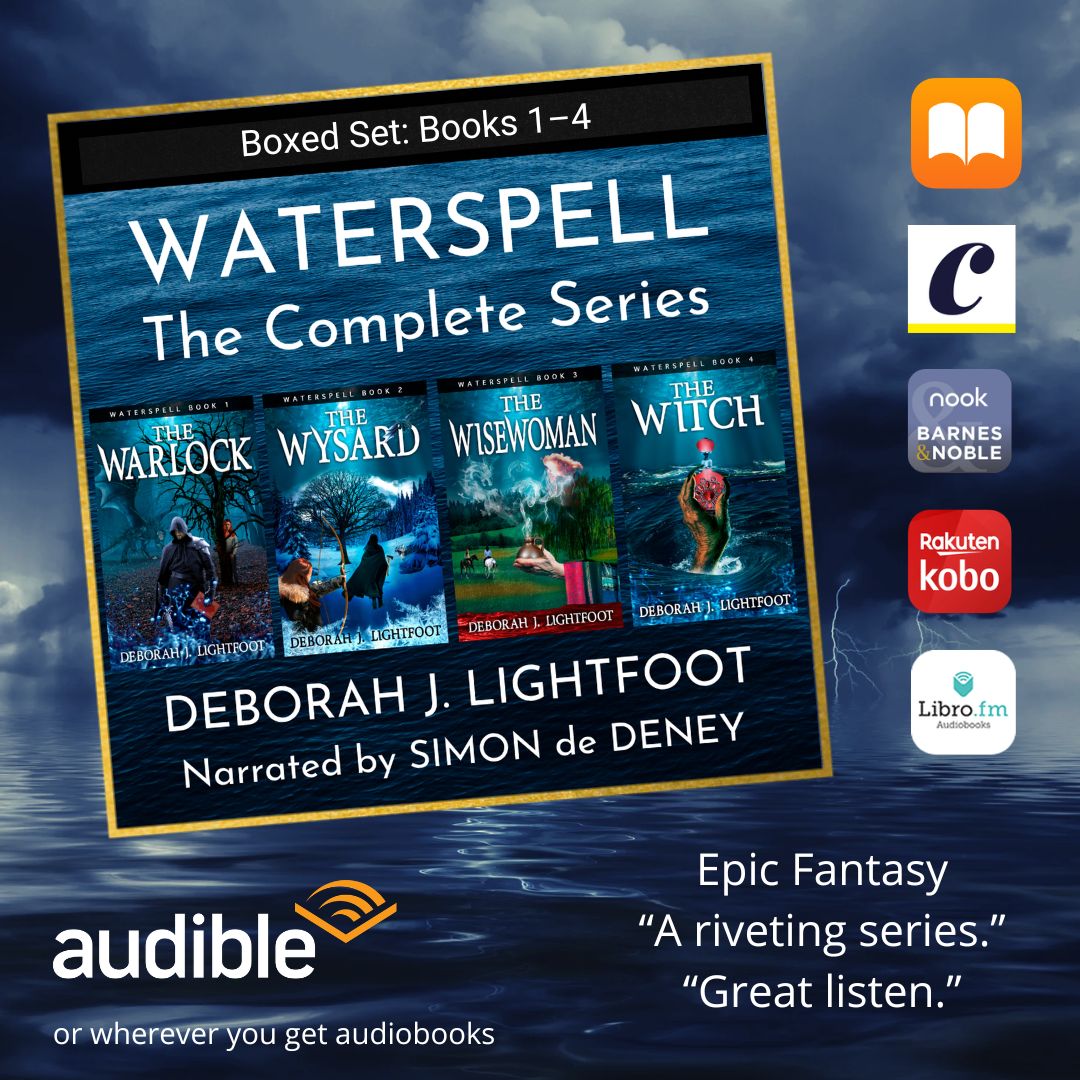
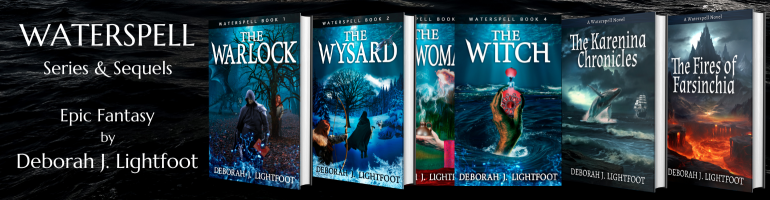
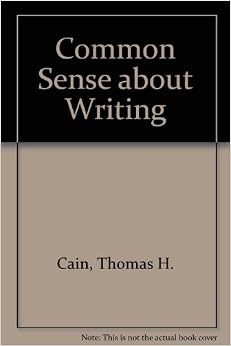
Waterspell, a fantasy trilogy by Deborah J. Lightfoot
Waterspell, a fantasy trilogy by Deborah J. Lightfoot
Leave a Comment

Filed under Audiobooks, Books and Readers, Coronavirus, Cover Design, On Writing, Waterspell fantasy trilogy, Writers

People Don’t Change? Yes, They Do.

This quote has meant the world to me at different times in my life, and in different ways.

After my husband died, suddenly and unexpectedly, leaving me nonfunctional for a trackless time, Cheryl Strayed’s words helped me on my journey toward understanding that his death had changed not only the circumstances of my life … his death had changed me. For a long time afterward, I was incapable of feeling any deep emotion except anger. Grief had wrung me out and left me emptied. Grief had taken my motivation, ambition, concentration … my caring. There were years when I truly didn’t care whether I lived or died. I’d lost my identity. All my old ideas about myself weren’t true anymore.

During those years, I felt no desire or impulse to write, or even to acknowledge that I had written. Cheryl’s words gave me permission to give up the idea that I was a writer. It wasn’t true anymore, it was an old, defunct notion of myself, and if I tried to cling to an identity that I had worn in my death-haunted past, it would mean surrendering the tiny sparks of joy that were slowly beginning to appear in my present.

After the unthinkable happened in November 2016 and America began marching toward fascism, my patriotism awoke and I got deeply involved in political activism. I made protest signs, I took to the streets, I registered voters, mailed postcards to voters, knocked on doors for progressive candidates, held office in a local group of liberal women … put in long hours doing everything I could to save my country from a dangerous sociopath. Few of my fellow and sister activists even knew that I had had a professional career in publishing, had edited magazines and books, and had written seven books including a fantasy trilogy.

Then came the year 2020, and coronavirus.

The virus was in America in January, but as I look back at my January 2020 calendar I see only my activism: political meetings, blockwalking for candidates, registering voters, attending the nearest Women’s March. Then February, and more of the same: protesting the treatment of asylum seekers at the Texas-Mexico border; attending candidate forums; getting trained on new computers for Election Day; working Early Voting. In amongst the activism I had the flu (or was it coronavirus? an antibody test may eventually tell me). While working Early Voting I caught a terrible head-cold that still plagued me when I put in a 15-hour day on March 3 as an election judge for the Democratic Primary.

My final political meeting happened on March 10. By then, cases of Covid-19 were being reported in the urban county next door, and all my activist friends decided it was time we hunkered down. I went to the supermarket on March 13—my final time to actually go inside the store. Since then, it’s been all pickup orders, with me staying safely in my vehicle while heroic grocery workers bring food to me.

Physical isolation = Time

I suddenly found myself with time again. After years of being exhaustively involved in political work, I was suddenly cocooned at home with my computer, my Internet connection, and a Nook tablet full of audiobooks. Thanks to my sister-in-law, who gave me an Audible membership for Christmas 2019, I had recently finished listening to The Lord of the Rings narrated by Rob Inglis. A masterful performance.

And an inspiration. Though I wasn’t writing now, I had written. I had a fantasy trilogy to my credit, which many readers had described as cinematographic. While I was writing Waterspell, I saw the story play in my head as a movie, and evidently that’s how it plays for my readers. I found the LOTR audiobooks to be even better than the films—they were as cinematographic as the movies, but unabridged, complete in every detail, the perfect synthesis—book-plus-movie equal audiobook.

Inspiration begat action. Production on the Waterspell audiobooks began on March 18. My narrator is breathtakingly good. He gives me goosebumps with his interpretation of my story.

And once again, Cheryl Strayed is helping me give up an old idea so I can embrace the joy—the change—that comes with a new idea. I spent years trying to save America from itself. But honestly, if coronavirus isn’t enough to remove a pathological narcissist from office—and all his soulless enablers with him—then there’s little I can do with my protest signs, political meetings, and earnest postcards.

I am not willing to surrender my newfound joy for my old idea that I’m somehow essential to saving the country. If it were ever true, it isn’t true now. I’ve acknowledged anew that I have written. Whether that will translate into new writing (Waterspell Book 4?) remains to be seen. But once again, I am changed. I can feel again. I can care again. I am experiencing emotions that are higher and better and deeper than anger. Motivation is returning, and even a hint of ambition.

Thank you, sister Suzy, for the gift of audiobooks, which planted the seed of the joyous new idea. Thank you, Cheryl Strayed, for giving me permission (thrice) to let go of the old and receive the gift of the new … The gift of the future.

Cheryl-Strayed-Quote-Don-t-surrender-all-your-joy


Leave a Comment

Filed under Books and Readers, On Writing, Waterspell fantasy trilogy

The Guidelines for Critique

Excerpted from “The guidelines for critique,” author/source unknown—a handout I found while sorting through old notes from writers’ conferences. These are excellent guidelines, well worth sharing. If anyone knows where this material came from originally, please tell me so I can give credit where it’s due.


 Critique Group Guidelines

  • Leave personalities out of it.
  • Keep it short and to the point.
  • If you don’t have something to say, don’t say it.
  • Have something to say.

Personal preferences as to genre have no bearing. If you don’t like a particular genre, chances are you haven’t read enough of it to make an important critical explication. This does not mean, however, that you cannot critique individual elements such as word choice, spelling, and punctuation. If you have a question concerning what genre a story is, ask.

Critique content only if relevant to the saleability or context of the book; e.g., blatant racism is generally unacceptable, and if the book is about a tea party [meaning a pre-21st century tea party], references to fighting in ‘Nam may have no place.

All critique, if valid and dispensed with good intentions, is positive. Even critique which may on its face appear to be negative is positive in that it points toward a goal of solid reconstruction. Praise, while nice, is not truly critique, and is rarely practically useful — keep it very short. “This is good,” springs to mind as a possible time-saver. As a rule, “negative” is more constructive than “positive.”

All critique, if valid and dispensed with good intentions, is positive.

Critique is not debate. As a critic, don’t get into a debate with the writer or another critic concerning any point you may have to make.

Don’t recount anecdotes of your own unless they’re directly and immediately relevant — and short!

Don’t repeat others’ critiques unless it is very important. Saying “I agree with such-and-such” is short and gets the point across nicely. Reiterating what that person said at length is unnecessary, time-consuming, and redundant in the broadest sense of the word.

Don’t contradict another’s critique unless you feel very strongly that it needs contradiction. Remember, it’s up to the writer to make the decision as to what s/he keeps and does not keep. An exception to this guideline is when you feel that another critic has missed the point of the reading or hasn’t a full understanding of genre requirements, or whatever. Sometimes the writer needs to know that his/her point was not missed by everyone.

Don’t ask questions unless you need a specific point of clarification.

Keeping It Short

The following is a list of individual points that critics often get hung up on when they should be looking at the broader scope of the writing. These are valid points. However, too much time may be spent noting specific references at times that might be better spent critiquing the larger, more deadly aspects of the work.

Checklist for critique:

  • Too many gerundal (-ing) endings
  • Too many adverbial endings
  • Too many adjectives
  • Too much “tell” and not enough “show”
  • Too slow
  • Too fast and superficial
  • Not enough emotion
  • Touch all the senses, including smell
  • Too many dialogue tags
  • Not enough tags
  • I got lost in the geography of the reading
  • The following words appeared frequently or in close juxtaposition: __________

(This series continues with Readers Facilitate Valid Critique and Critiquing Common Writing Errors.)

Leave a Comment

Filed under On Writing

Awakening Your Stylistic Instinct

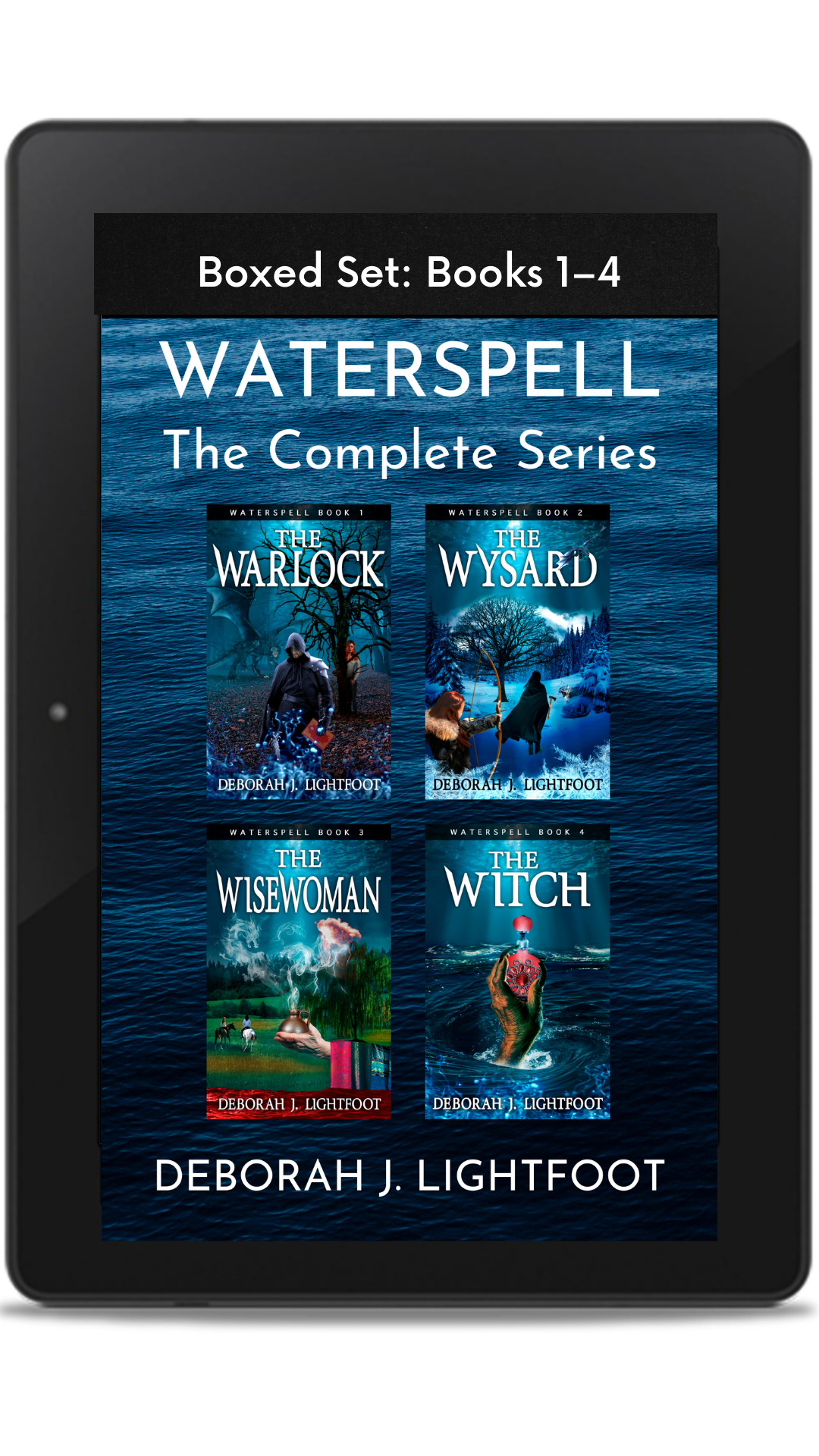
From my late friend Ruth Cauble, I inherited a book called COMMON SENSE ABOUT WRITING, by Thomas H. Cain. Its copyright date is 1967, making it a brand-new book when Ruth won it as a prize in a writing competition. She inscribed the flyleaf: “Rec’d for first place award in the Grace Gaylord Creative Writing Contest  — June 9, 1967 — R. Sammons Cauble.”

I am endlessly interested in matters of style, so I turned first to chapter 7, titled “Expression: Style and Sentences.” Dr. Cain, who wrote the book when he was an associate professor of English at McMaster University in Hamilton, Ontario, Canada, defined style as “the total effect of writing.”

“It is the effect achieved,” he wrote, “by the ideas, the order, the paragraphs, the sentences, and the words all working together harmoniously.”

Cain recognized that a writer’s style is a very personal thing. No two people will write exactly alike, or even agree completely on what constitutes good style:

“The reason may be that when you try to express your ideas in the best words, sentences, and sequences of sentences, a whole army of subjective human variables comes into action: personal factors, individual gifts, range of experience, reading background, discretion, sense of decorum, feeling for rhythm, and plain taste … style springs from just such individual sources.”
Style, then, is partly subconscious: it arises from a writer’s way of thinking. But by reading widely and intensively, we can sharpen our stylistic instincts.


We’ve all heard the advice to read widely in the genre in which we wish to write: memoir, literary fiction, speculative fiction, etc. According to Alan Cheuse, author of novels, short fiction, and memoir:


“You can’t write seriously without reading the greats in that peculiar way that writers read, attentive to the particularities of the language, to the technical turns and twists of scene-making and plot, soaking up numerous narrative strategies and studying various approaches to that cave in the deep woods where the human heart hibernates.”


To help you read in the writer’s “peculiar” focused way, Dr. Cain suggested this exercise:
  1. From a book you especially admire, choose a passage of about 12 or 15 sentences. Read the passage silently.
  2. Note the structure of each paragraph.
  3. Read the passage aloud, listening to the stages in the paragraph structure and especially to the rhythm of the sentences and how they vary in length and emphasis.
  4. Now copy the passage slowly by hand (don’t type), sentence by sentence, first reading each sentence aloud and noting its pattern of emphasis and rhythm.
  5. Copy the entire passage again (typing it if you wish), listening for the way the sentences work together in groups of two or three.


“By the time you reach Step 5,” Cain predicted, “you will find that you have almost memorized the rhythm and scheme of emphasis in some sentences, even though you can’t quite repeat the words. This is enough. The whole point of the exercise lies in sensing when sentences sound right. It marks the awakening of the stylistic instinct that guides most professional writers as they write.”


I did this exercise with one of my favorite books, The Golden Compass by Philip Pullman. In analyzing a page chosen at random from near the middle of the story, I noted unusual similes, questions presented in groups of three (employing “the power of three”), specific and colorful word choices, strongly rhythmic phrasing, and the use of the conjunction “and” to create both a driving rhythm and a smooth flow. On just that one page, I identified and studied a wide range of the techniques that contribute to Pullman’s powerful and pleasing style.


Dr. Cain suggested doing the exercise one hour a day for a week or two. This kind of intensive reading isn’t a replacement for an extensive reading background, but it can be a useful crash course in developing your stylistic instinct.


(Thank you, Ruth Ann. I love the book.)

2 Comments

Filed under Books and Readers, On Writing, Writers

Frugality With Adverbs and Adjectives: Doing More With Less

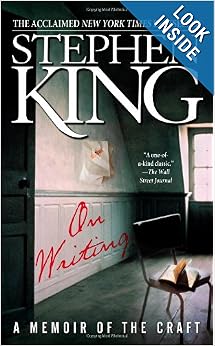
“The road to hell is paved with adverbs,” said Stephen King in his excellent book, On Writing: A Memoir of the Craft.

When I first tried my hand at fiction, it took me a while to understand that adverbs and adjectives are methods of telling, not showing. Oh, I’d been warned away from adverbs since high school or before. In my writing I’ve always favored strong verbs over weak-verb-plus-adverb combinations: “race” or “sprint” is stronger than “run quickly.”

But as I made the transition from nonfiction and began writing novels, I somehow got it into my head that unusual or quirky adjectives would add layers of meaning and color to my nouns. I wasted time digging through thesauri and even crossword puzzle dictionaries looking for nifty adjectives that writers before me had seldom dared to use:

rubicund, benignant, recondite, brumous …

Well, maybe not those exactly, but you get the idea. For a while I was pleased with myself for taking the time to find exactly the right adjective to describe to the nth degree precisely what I wanted the reader to know about any given noun.

Then it came time to read my fiction aloud. Thank heavens I read my drafts out loud to myself before taking them to my critique group. Scritch, scritch, scritch — my red pen stayed busy striking through all those distracting, unnecessary adjectives.

The experience taught me that nouns and verbs show, but adjectives and adverbs tell. In any sentence, it’s preferable to use a solid, precise noun and a vigorous, precise verb. Tack on the modifiers only if they’re really, truly needed.

Don’t write: “The cat, predominantly white with red and black patches, snuck up on the green and gray bird.”

Write: “The calico stalked the parakeet.”

Noah Lukeman devotes chapter 2 of The First Five Pages (Fireside, 2000) to adjectives and adverbs. Lukeman says: “Most people who come to writing for the first time think they bring their nouns and verbs to life by piling on adjectives and adverbs, that by describing a day as being ‘hot, dry, bright and dusty’ they make it more vivid. Almost always the opposite is true … Adjectives and adverbs often, ironically, weaken their subjects. It is as if the writer were saying to the reader, ‘This noun (or verb) is not strong enough to stand on its own, so I will modify it (or build it up) with a few adjectives (or adverbs).”

Overusing adjectives was a passing phase in my fiction-writing career. Now with every read-through of a manuscript, I’m ruthless about cutting the modifiers. Keeping in mind that “Less is more,” I search for any word, phrase, sentence, or paragraph that I can cut.

“In composing, as a general rule, run your pen through every other word you have written; you have no idea what vigor it will give your style.” —Sydney Smith, Lady Holland’s Memoir (1855)

2 Comments

Filed under On Writing, Writers

I Swear

Illustration by Corliss Elizabeth Williams for Time Magazine

I’m an information junkie. I’m always collecting it — tearing articles out of magazines (I still subscribe to ink-on-paper magazines); quoting the best bits; passing along items that interest me. Possibly I’m a low-level hoarder.

(Illustration by Corliss Elizabeth Williams for Time)

I’ve kept an article I tore out of the July 15, 2009, TIME magazine: “Why Swearing Is Good for You.” Author Tiffany Sharples says that swearing “can do more than vent frustration: it can actually reduce physical pain.” A study in Britain found that test subjects could endure painfully cold water longer while swearing. Repeating “a curse word of their choice” made the ice water feel less intensely painful.

“In swearing,” said the study’s lead author, “people have an emotional response, and it’s the emotional response that actually triggers the reduction of pain.”

I passed along a copy of that article to a writer friend who often advised his colleagues to “put more cussing” in our stories. He seemed to instinctively appreciate the emotional power of swearing.

Of course, for those who write young-adult fiction, swearwords can be problematical. Some teachers, librarians, and parents frown on including obscenities in stories aimed at teenage (and up) readers.

In my high-YA / crossover fantasy series Waterspell, my deuteragonist (the character taking the part of second importance) swears like a sailor, and my protagonist, Carin, can almost match him. Their swearing habits are essential to revealing who these characters are.

To get around the objections that would be raised if I used standard American profanity, I gave my characters a different divinity to swear by. They are in a parallel universe, so it makes sense that their holy figures would have different names than the gods do on Earth. Instead of swearing “by God!” it’s “by Drisha!” in their world.

Another helpful source of inoffensive profanity comes from old English expressions like “gorblimey,” which is a euphemism for “God blind me.” My wizard is fond of saying “Drisha blind me!” It makes people wince in his world, since it’s such a strong oath to them. But Earthlings are not offended.

In my never-ending quest for good, pain-relieving swearing, I mine sources such as old Irish fairy and folk tales. From them I’ve gotten such gems as “A thousand murders!” and “My breath and blood!”

Thanks to TIME’s Tiffany Sharples for giving me even more reasons to collect the best in profanity. My characters get into painful situations that require them to vent via a good outburst of colorful language.

Leave a Comment

Filed under Adverse Reactions: A Novel of the Paranormal, Books and Readers, On Writing

Tough Writing Part 1: It’s All About Style

Should a character’s emotions be often and overtly on display? Some writers think so. I was occasionally urged by my fellow writers and critique partners to make Carin — the somewhat stoic point-of-view character in my Waterspell series — more openly emotional.

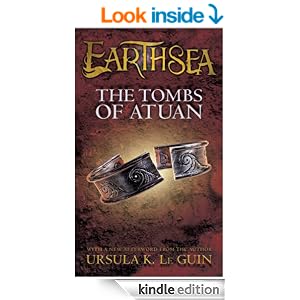
But many of the works I love best, like The Tombs of Atuan, the second book in Ursula K. Le Guin‘s Earthsea Cycle, are almost stark of emotion. The bare-bones style lends great power to passages like this:

“The room was higher than it was long, and had no windows. There was a dead smell in it, still and stale. The silent women left her there in the dark.

“She held still, lying just as they had put her. Her eyes were wide open. She lay so for a long time. … The glimmer died from the high cell walls. The little girl, who had no name any more but Arha, the Eaten One, lay on her back looking steadily at the dark.”

—from The Tombs of Atuan, copyright 1970, 1971 by Ursula K. Le Guin

Some might ask, “What is the little girl feeling right now?” But I am perfectly content to extrapolate from what I might be feeling in Arha’s place. I don’t need to have her emotional state — be it fear, desperation, resignation, or something else — laid out for me.

To cite a more contemporary example: Katniss, the admirably self-sufficient protagonist of Suzanne Collins‘ The Hunger Games, faces the prospect of almost certain death. She reacts by calmly instructing her mother and sister in how to survive after Katniss is gone:
“… I start telling them all the things they must remember to do, now that I will not be there to do them for them. Prim is not to take any tesserae. They can get by, if they’re careful, on selling Prim’s goat milk and cheese and the small apothecary business my mother now runs for the people in the Seam. Gale will get her the herbs she doesn’t grow herself, but she must be very careful to describe them because he’s not as familiar with them as I am. He’ll also bring them game — he and I made a pact about this a year or so ago — and will probably not ask for compensation, but they should thank him with some kind of trade, like milk or medicine.”

—from The Hunger Games, copyright 2008 by Suzanne Collins

Readers don’t need to see Katniss’ fear. It’s palpable because it’s so carefully submerged under her tightly controlled exterior.

I’ve been watching “Building Great Sentences: Exploring the Writer’s Craft,” a course on DVD from The Teaching Company. Professor Brooks Landon of The University of Iowa talks about the “tough” style of writing:

“Kernel sentences that simply posit information without detail or explanation … state something and then leave it to subsequent sentences to add information …

“This is macho-speak that bluntly posits information without reflecting upon it or elaborating on it, and we find it exactly where we might expect it, as in the opening to David Morrell’s 1972 novel First Blood.

“[These sentences] are characteristic of the style Walker Gibson calls ‘tough,’ a style frequently associated with some of Ernest Hemingway’s best-known fiction. This style is effective when creating characters who act, but don’t think much about what they do.”

—from “Lecture Four: How Sentences Grow,” Building Great Sentences: Exploring the Writer’s Craft, Course Guidebook, copyright 2008 by The Teaching Company

Here is an example that Professor Landon uses in his discussion of the “tough” style of writing:

“His name was Rambo, and he was just some nothing kid for all anybody knew, standing by the pump of a gas station at the outskirts of Madison, Kentucky. He had a long heavy beard, and his hair was hanging down over his ears to his neck, and he had a hand out trying to thumb a ride from a car that was stopped at the pump.”

—from First Blood, copyright 1972 by David Morrell

That opening satisfies me. I see a hint that there’s more to young Rambo than meets the eye — “he was just some nothing kid for all anybody knew” tells me that people don’t really know him, and suggests that he’ll be a hard guy to get to know. That’s fine. I have no need to explore Rambo’s “feelings.” If he shows some emotion later on, it’ll be all the more effective for coming from someone who’s generally unemotional.

(Continues in Part 2 …)

Leave a Comment

Filed under On Writing

Tough Writing Part 2: On the Spectrum of Writing Styles

(Continued from Tough Writing: Part 1)

To look at another example of the declarative sentences that typify the style called “tough”:

“In the late summer of that year we lived in a house in a village that looked across the river and the plain to the mountains. In the bed of the river there were pebbles and boulders, dry and white in the sun, and the water was clear and swiftly moving and blue in the channels. Troops went by the house and down the road and the dust they raised powdered the leaves of the trees. The trunks of the trees too were dusty and the leaves fell early that year and we saw the troops marching along the road and the dust rising and leaves, stirred by the breeze, falling and the soldiers marching and afterwards the road bare and white except for the leaves.”
—Ernest Hemingway, A Farewell to Arms (1929)

The driving beat of these sentences builds a picture in the reader’s mind of armies marching, marching, their boots pounding the road, raising the dust. There’s a definite note of desperation in this passage, a starkness that is far more effective than having the narrator crying out, or shouting at the troops, or otherwise showing his emotions.

As Professor Brooks Landon describes the “tough” style, the speaker/narrator/protagonist says only what he can see or directly experience, stating information without processing it. This style introduces the reader to a mind (a character’s mind) that is unreflective, almost anesthetized, or so focused on one purpose that it simply refuses to think about anything else or consider alternate points of view.

I’ve come to realize that, on a spectrum of writing styles ranging from “tough” at one extreme to “demonstrative” at the other, I fall nearer the tough end. The circumstances of her early life have made my Waterspell girl, Carin, a self-contained, rather stoic kind of person. She’s quick to act. And in a situation that calls for action, she wants to be all business. The time for “getting in touch with her feelings” comes later. She may be afraid, but only after the fact. She doesn’t take time during the event to dwell on her fear — which is a trait that some of my fellow writers have seen as a fault.

I, however, see it as an authentic character trait, because it’s my trait, a strong element in my makeup since childhood. I act first and think — or feel — later.

When I was in college a bullet exploded through the wall of my apartment six inches to the left of my shoulder. My initial reaction was to fling open my front door and go storming out to confront the shooter. That was stupid, of course. For all I knew, that bullet through my wall was the prelude to a full-bore gun battle. But the shooter emerged from next-door at the same time I stepped outside, and his face was white. As I shouted at him — “What the hell are you doing? You could have killed me!” — he stood there looking faint. It had been an accidental discharge. He was cleaning a loaded gun.

I felt nothing of fear at that moment. Only afterward, when I had time to process what had happened, did I realize how close I’d come to catching that bullet. A few inches to the right, and it would have gone through my heart. Then — only then — I collapsed onto my bed and started to shake. After the fact, I knew fear.

That’s my Carin. She takes action, she runs, she fights, she shouts. Or she quietly, deliberately makes her plans and bides her time. Emotions take a backseat. They are a luxury that she has seldom been able to indulge in.

Most of my readers seem to understand her. Occasionally, though, I get feedback urging me to make her a more overtly emotional creature. Sorry. Can’t do it. That’s not who she is. Or who I am.

I go back to the examples I used earlier from Ursula K. Le Guin and Suzanne Collins. When those writers state information and omit emotion, they still provide an emotional undercurrent that gives me a feeling for all the things that are left unsaid:

“If a writer of prose knows enough about what he is writing about he may omit things that he knows and the reader, if the writer is writing truly enough, will have a feeling of those things.”
—Ernest Hemingway

Leave a Comment

Filed under On Writing

Add the Arts to the STEM Curriculum and Unleash the Power of STEAM

In 2015, as Lewis Carroll fans celebrated the 150th anniversary of the publication of Alice’s Adventures in Wonderland, I was privileged to attend a presentation by sculptor Bridgette Mongeon at the spring meeting of the Lewis Carroll Society of North America (LCSNA), held at the Harry Ransom Center in Austin, Texas, in conjunction with the Center’s special Alice exhibition.

"Move One Place On" -- Copyright Bridgette Mongeon 2015
“Move One Place On” — Copyright Bridgette Mongeon 2015

Bridgette, an artist, sculptor, writer, educator, public speaker, and wife and mom too, was commissioned to create a monumental bronze sculpture of Alice in Wonderland’s Mad Hatter tea party. Visitors can not only admire the sculpture, but also sit themselves down to it and have a picnic lunch with Alice, the Cheshire Cat, the March Hare, and the Hatter, as shown in the above digital model.

In her talk to the LCSNA, Bridgette spoke of the STEM curriculum (science, technology, engineering, and math) and how vital it is to add an “A” for art, which turns STEM into STEAM. She has given STEAM programs to young women in grades 6 through 8, in which she ties it all together: Art, Technology, Medicine, Math, AND Literature. Bridgette creatively fuses art and technology: she creates sculptures using both traditional (clay and wax) and digital processes. Lewis Carroll fits well with Bridgette’s many interests because he was an artist and photographer, a mathematician, and, of course, a writer.

I was fascinated and inspired by Bridgette’s presentation. In my freelance work as an editor for a national educational organization, I specialized in STEM and STEAM subjects. I edited manuscripts on animation, archaeology, architecture, energy, environmental science, oceanography, photography, textiles, and theater, among others. Even the most technological subjects need the “A” added for “art.” Art imparts the human touch and often creates a fresh perspective that can lead to new discoveries.

Bridgette cited the example of an artist who sculpted her cancer tumor, and how the creation of “a full-on object that they could walk around” is changing the way oncologists approach the treatment of cancer.

I was also reminded of astrophysicists’ reactions to the computer-generated black hole in the movie Interstellar. Actual observational data was used to create the movie’s visualizations, leading physicist Kip Thorne to realize: “Why, of course. That’s what it would do.” From the art, he got something he didn’t expect: a scientific discovery.

Leave a Comment

Filed under Alice in Wonderland, On Writing